
Chheang Chheat, 20, is a rice farmer from Thlok village, Speu Ka commune, Baphnom district, Prey Veng province, Cambodia, living with his parents. The youngest of four siblings (three sisters and one brother), Chheat has been industrious from a young age, helping with rice farming since he was 10 years old. He left school after grade 10 to assist in his father’s wedding hall decoration and loudspeaker service business while his father cared for Chheat’s seriously ill mother.
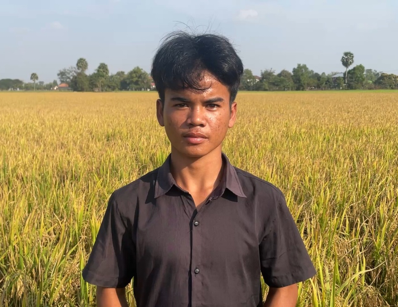
Chheat’s family depends mainly on rice farming, cultivating three hectares of land. To supplement their income, Chheat also grows vegetables and fruit trees and raises chickens, ducks, frogs, and snails for family consumption and sale. In earlier years, he worked with his father as a carpenter and construction laborer. Now, with his parents no longer able to work due to their age, Chheat manages the farm and family business. Since 2024, he has also become an active member and rice seed producer with the Baphnom Meanchey Agricultural Cooperative (BMAC).
Being a rice farmer is challenging for Chheat, as his fields rely entirely on rainfall, with no irrigation system in place. Climate change, especially irregular rainfall and drought, pushed his family to shift from manual transplanting to direct seeding nearly a decade ago. However, this led to serious problems: heavy weed infestations, pest and disease outbreaks, declining yields, and greater dependence on agrochemicals and synthetic fertilizers, which raised costs and harmed soil health. Local middlemen also offered low prices for their paddy.
Since becoming a member and rice seed producer of BMAC, Chheat has gained valuable opportunities for technical training through different projects such as the Youth and Smart Agriculture Project (implemented by AVSF1 and FCFD2) and APFP-FO4A project (implemented by FCFD among 6 National Farmers’ Organizations in Cambodia within the project framework). He has also actively participated in various events organized by BMAC’s development partners, including meetings, general assemblies, exchange visits, and more. Beyond capacity building, BMAC has supported him by offering competitive prices for his rice seed production, providing job opportunities in rice seed handling at its warehouse, and distributing annual dividends.
Facing challenges and increasing competition in rice farming, Chheat has adopted two key innovative approaches to improve productivity, reduce costs, and strengthen his market position.
First, he shifted from manual direct seeding to the use of a rice transplanter. This change has significantly reduced labor requirements and enhanced planting efficiency. Additionally, by adopting machine transplanting, Chheat has been able to minimize the use of agrochemical inputs such as herbicides, insecticides, and synthetic fertilizers.
Second, he focuses on producing high-quality rice seed through a contract farming scheme. This approach allows him to meet specific standards required by the cooperative while ensuring better income and securing market opportunities.
In 2024, through these innovative practices, Chheat applied the rice seed production techniques introduced by BMAC’s development partners. These included the use of quality seed, proper seedling production, transplanting methods, and integrated nutrient and pest management. He then signed a contract farming agreement with BMAC to produce and supply high-quality rice seed. For his contracted rice plots, he also hired BMAC’s rice transplanter service to improve planting efficiency.
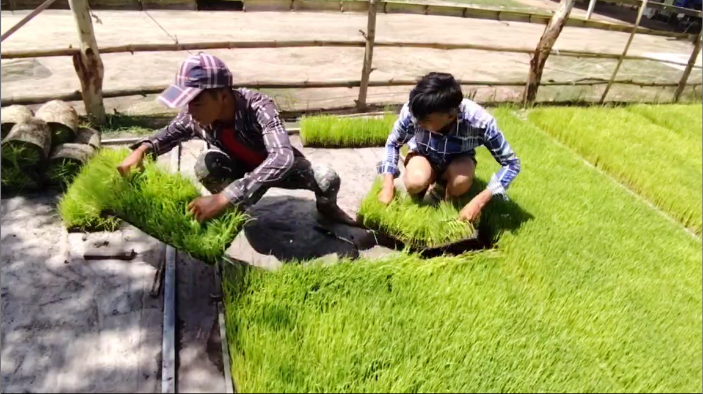
During the contract implementation, Chheat actively engaged in applying rice seed production techniques and complying with quality standards and regulations. He also took part in operating and maintaining the rice transplanter. With technical support from BMAC, Chheat gained practical knowledge and skills in nursery management, rice transplanter operation, and machine care.
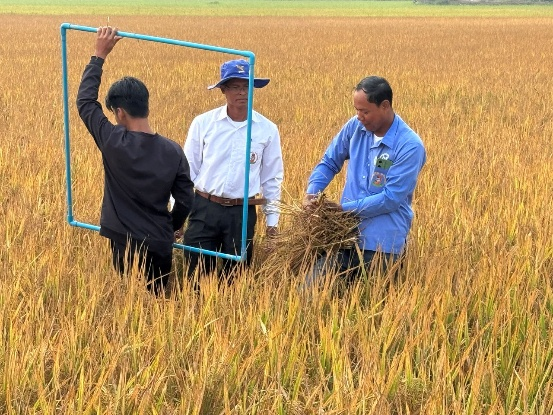
Recognizing the benefits and effectiveness of machine transplanting such as labor savings, better seedling establishment, and reduced agrochemical use, in 2025, Chheat decided to invest in his own rice transplanter and 500 seedling trays. He now uses the machine for his family’s rice fields and provides transplanting services to neighboring farmers, generating additional income while promoting modern farming practices in his community.
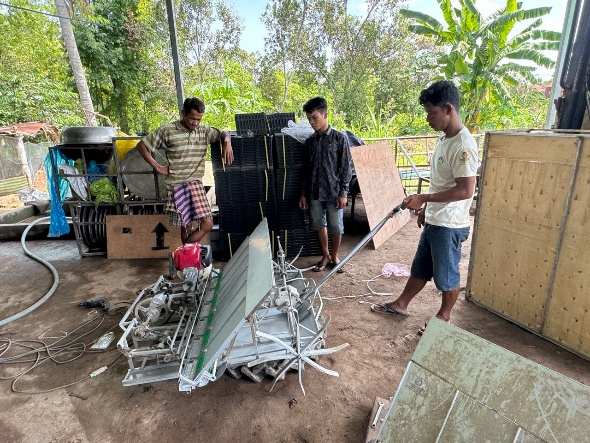
By implementing innovative approaches, Chheat adopted agroecological practices and used a rice transplanter to cultivate the OM5451 variety. This shift significantly improved his farm productivity. His rice yield increased to 4,300 kilograms per hectare, compared to 2,500 kilograms per hectare with traditional direct seeding. This notable yield improvement has strengthened his household’s food security and income.
Through the contract farming arrangement, BMAC purchased his rice seed at 1,500 riels per kilogram, enabling Chheat to earn an additional 2.7 million riel (approximately USD 675) in gross value for the season. The guaranteed market and fair price helped reduce the risks he previously faced from fluctuating market prices.
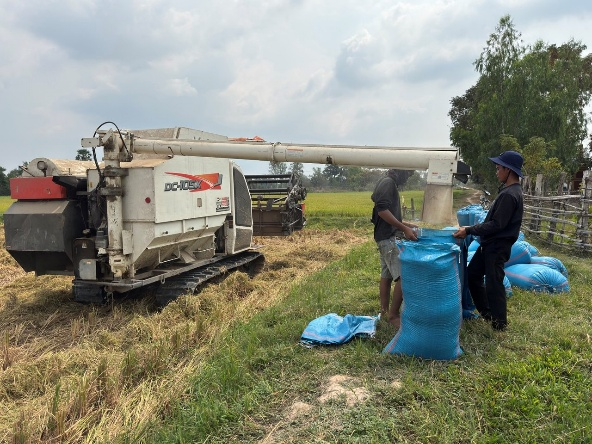
The method also lowered production costs by reducing the use of herbicides and insecticides, which helps protect biodiversity and the environment. Chheat’s success has encouraged neighboring farmers to consider similar innovations, spreading positive impacts within the community.
Chheat shared, “Previously, I spent too much on chemicals, but weeds were still a problem. Now, with transplanting and better practices, my field is cleaner, my production costs are lower, and my income has improved. I plan to expand the transplanted area and offer rice transplanter services to farmers in my community.”
From this experience, Chheat encourages other young farmers to adopt modern techniques such as machine transplanting and agroecological practices. He believes these methods help reduce costs, protect the environment, and create new income opportunities.
1 AVSF stands for Agronomes et Vétérinaires Sans Frontières
2 FCFD stands for Federation of Cambodian Farmer Organizations for Development
Comments are closed