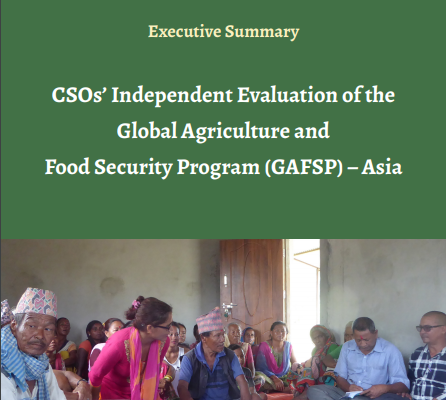
EXECUTIVE SUMMARY 1. The Asia-Pacific Farmers Program (APFP) and the Support to Strengthening FOs for Asia (FO4A) build on the previous program, the Medium-Term Cooperation Program (MTCP2), and the ASEAN Farmers Organization Support Program (AFOSP), primarily strengthening the policy engagement of FO networks. While improvement in policy engagement opened window of opportunities to improve livelihood […]
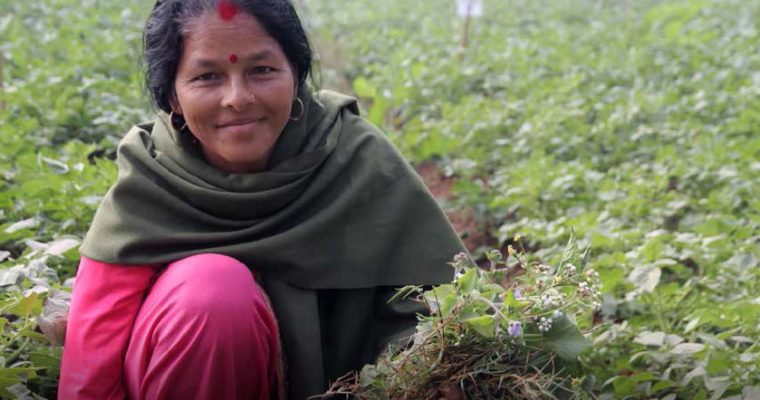
DOWNLOAD ENGLISH VERSION: Is-GAFSP-reaching-small-scale-food-producers-in-Nepal_English DOWNLOAD NEPALI VERSION: Is-GAFSP-reaching-small-scale-food-producers-in-Nepal_Nepali Introduction: The GAFSP supported AFSP in Nepal Despite progress being made in recent decades to reduce poverty in Nepal, World Bank figures show that 25.2 percent of the population was still living below the national poverty line in 2010.1 The proportion of undernourished people decreased from 22.8 […]
REPORT: Support to GAFSP CSO Asia (January – August 8, 2017) Introduction and Background Civil Society Organizations (CSOs) such as farmer organizations (FOs), Non-Governmental Organizations (NGOs), outreach groups, and universities have varying roles in country-led strategic planning that GAFSP aims to support. Effective empowerment of farmers in country program implementation through producer organizations, for example, […]
REPORT: Support to GAFSP CSO Asia (August – December 2017) Introduction and Background The GAFSP Steering Committee, the Program’s decision-making body, has allocated three seats to Civil Society Organizations (CSOs): a seat to represent the voice of CSOs in African developing countries, a seat to represent the voice of CSOs in Asian developing countries, and […]
The Global Fund for Agriculture (also referred to as the Global Agriculture and Food Security Program or GAFSP) was established in April 2010 after the 2007-2008 global food crisis. Aid to small-scale agriculture had been steadily decreasing for decades despite the fact that there are over 500 million small-scale food producers and that growth in […]
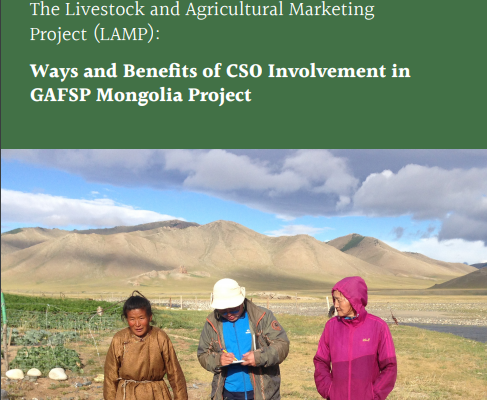
Mongolia, a vast country of 1.56 million square kilometers, is home to 15 times more livestock than people. It has over 2.7 million human population and 43 million livestock as of 2010. The transformation of Mongolia after the collapse of the Soviet Union from collective socialism to a market economy disrupted urban and rural livelihoods, […]
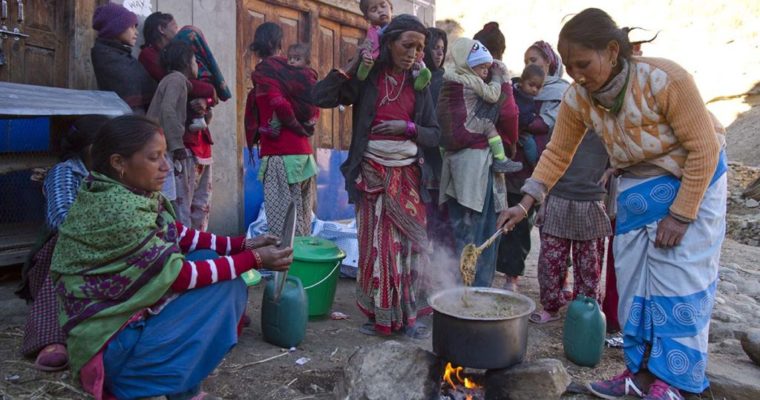
This report can be downloaded in English and in French. Farmers make up more than three quarters of Nepal’s population. Yet the agricultural sector accounts for only a third of the country’s GDP, and many rural communities are experiencing extreme poverty. Among them are women, indigenous people (Janajatis), and members of the lowest Hindu caste (Dalits). Facing […]

Report from the Regional Conference on Forest and Farm Producer Organizations (FFPOs)