
Highlights from Manila: Days 1-3 of the FORCE 2.0 Workshop
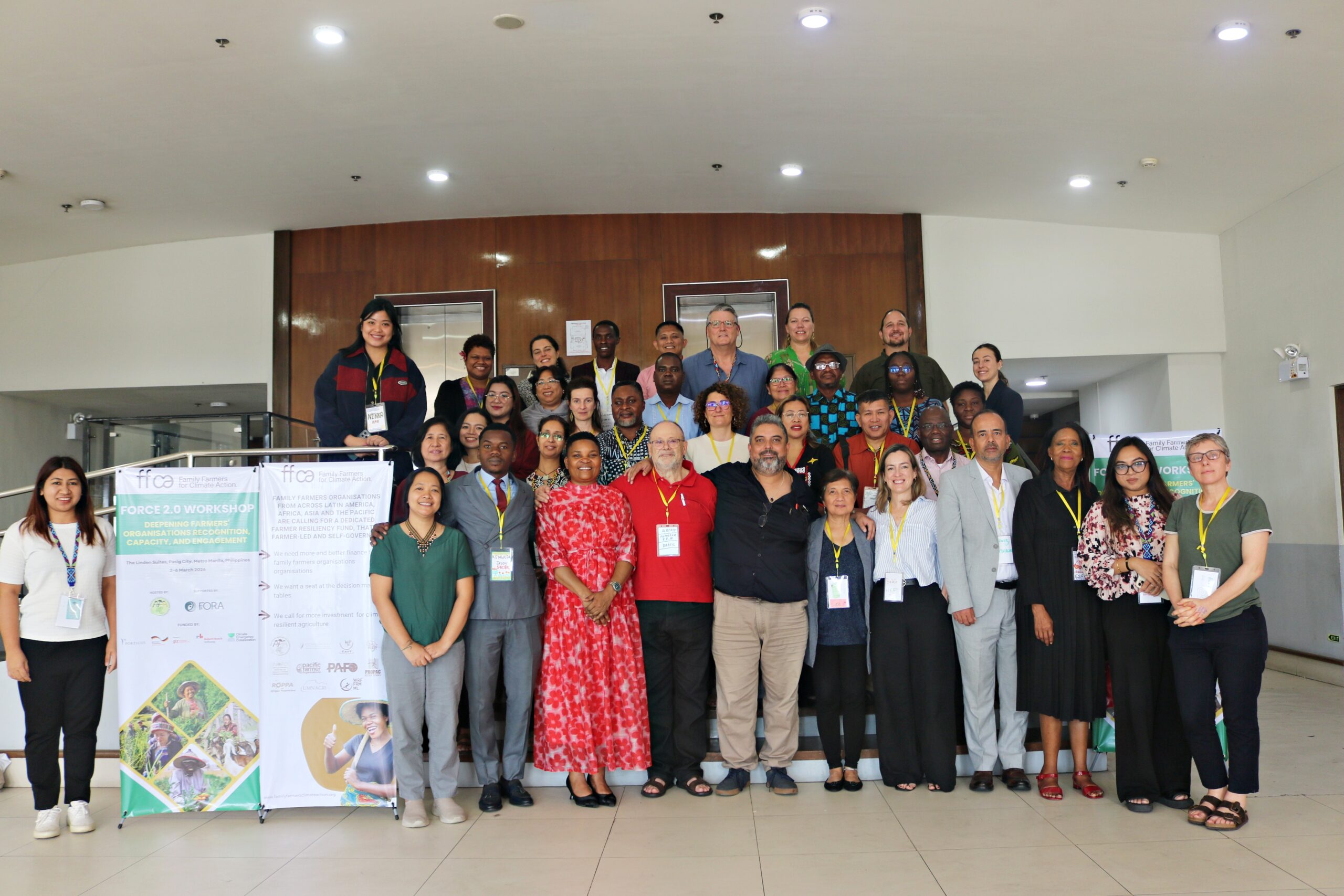
This week in Pasig, Metro Manila, Philippines, forty leaders from 18 national, regional, and global farmer organizations have come together for the FORCE 2.0 Workshop — Deepening Farmers’ Organisations’ Recognition, Capacity, and Engagement.
These organizations collectively represent more than 95 million small-scale family farmers around the world. And the reason they are here is simple: farmers who are already living with the impacts of climate change must have a real voice in shaping how climate finance is used.
Here is what the first three days have looked like.
Day 1: Understanding the global landscape
We started by grounding ourselves in a difficult reality. Family farmers produce up to 80% of the food in some regions, yet they receive only 0.3% of international climate finance.
Our discussions with Red Constantino (Constantino Foundation) and Beau Damen (Food and Agriculture Organization) helped unpack how global geopolitics, the legacy of fossil fuels, and current financing systems shape where climate funds actually go.
The conversations also challenged us to move beyond a narrative of constant crisis. Instead of remaining trapped in emergency responses, we explored how a prosperity agenda—rooted in agroecology and sustainable farming—can strengthen the resilience and livelihoods of family farmers.
We also heard inspiring examples of climate resilience initiatives from the Peace and Equity Foundation, Foundation for the Philippine Environment, the Adapting Philippine Agriculture to Climate Change (APA) Project, and the Indigenous Peoples of Asia Solidarity Fund, including experiences in establishing community-driven funds.
Day 2: Defining our key asks
On the second day, the conversation turned toward clarity and strategy.
Participants worked together to define the concrete changes we want to see, both nationally and globally. What should climate finance actually look like if it truly supports family farmers? What policies and mechanisms need to shift?
These discussions helped shape a shared set of priorities that farmer organizations can collectively push forward.
Day 3: Turning priorities into strategy
Today, the focus is on translating those priorities into a clear influencing strategy. A strategy that moves global audiences beyond awareness and toward real action.
The work continues this week as farmer organizations strengthen their collective voice and push for a future where family farmers are recognized not just as victims of climate change, but as central actors in climate solutions.
Stay tuned for more updates from this Workshop in Manila.
Comments are closed