
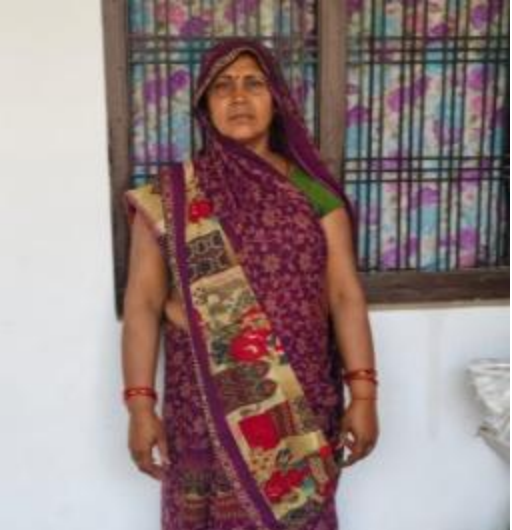
Mithlesh Kumari, a farmer from Meerak Nagar in Mohanlalganj block, Lucknow district, India, is an inspiring example of resilience and leadership in agriculture. When her husband, Vijay Shankar, also a farmer and the family’s primary breadwinner, fell ill four years ago, Mithlesh found herself facing immense financial challenges. Refusing to give in to hardship, she took the reins of the family’s livelihood into her own hands.
Determined to sustain her household through farming, Mithlesh began cultivating high-value cash crops such as potatoes, peas, beetroot, ramdana beans, and tomatoes. Despite her efforts, she initially struggled to receive fair prices for her produce in the market.
Her turning point came when she met a SEWA sister during a community meeting, who introduced her to the benefits of Farmer Producer Organizations (FPOs). With consistent encouragement from SEWA, Mithlesh not only joined the movement but also took a leadership role. She mobilized over 300 women farmers across villages, including Bairam, Meerak Nagar, Bahadurpur, and Nigohan, and helped establish the Mohanlalganj Krishak Vikas Producer Company.
The Mohanlalganj Krishak Vikas Producer Company enabled farmers, particularly women, to shift toward more income-generating crops such as lemongrass and puffed rice. Mithlesh and her team did not stop there. They added 19 women to a cluster cultivating Gokhru and began buckwheat farming as a new venture. Through these collective efforts, farming became a means of survival and a path to prosperity.
With support from SEWA and the APFP-FO4A program, the women farmers were trained in sustainable farming techniques, seed selection, and organic methods. An agri-clinic was established, and Mohanlalganj Krishak Vikas Producer Company members began producing their own organic fertilizers and pesticides. Mithlesh herself set up a vermi-wash and earthworm rearing unit, with similar units now running across nearby villages.
Further expanding their capacity, the organization is preparing to launch a seed processing unit to ensure access to high-quality seeds, paving the way for better yields and healthier crops.
Thanks to Mithlesh’s vision, combined with the technical and institutional support from SEWA and the APFP-FO4A program, hundreds of women farmers in the region are now empowered to lead, innovate, and transform their communities. Mithlesh’s story is a testament to how women, when supported with the right tools and networks, can become changemakers in agriculture.
APFP-FO4A is implemented by the consortium Asian Farmers’ Association for Sustainable Rural Development (AFA) and La Via Campesina (LVC) and funded by the European Union and the International Fund for Agricultural Development (IFAD).

Comments are closed