
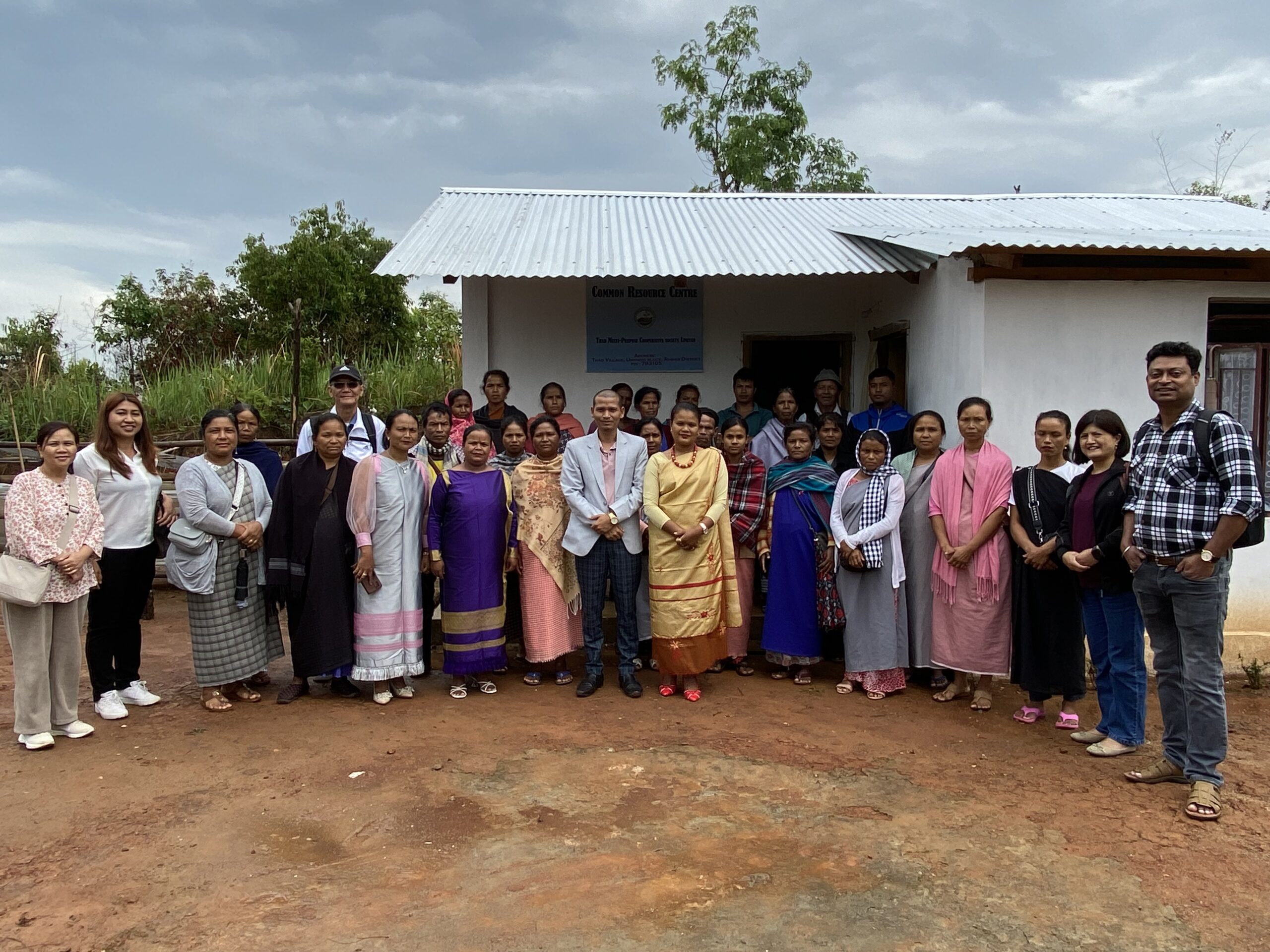


Meghalaya, India – The Thad Multipurpose Cooperative Society in Ri-Bhoi District, Meghalaya, India was once a humble farmer club founded in 2019 by villagers of Thad. The collective has grown into a registered cooperative as of 2024 and now stands as a beacon of what farmer solidarity and well-directed support can achieve.
The origins of the cooperative lie in community-led initiative. “We started as a farmer club ourselves,” shared Baidalin Rantong, one of the founding members. “After NEICORD’s initial training and intervention ended, we did not stop. We saw the value of coming together.”
The formation of Thad Farmers Producer Organization was a result of this drive. The farmers began organizing, mobilizing, and scaling up. Starting with just 30 members, the cooperative has now grown to over 100, including 75 active members and a dedicated management team. Women in the cooperative hold decision-making powers, underscoring a commitment to inclusivity and shared leadership.
The cooperative received financial support of USD 10,300 from the APFP-FO4A program through the Northeast India Committee on Relief and Development (NEICORD). The funds were strategically utilized as working capital, for the establishment of a collection center for raw agricultural produce, particularly pineapple and ginger, and for the purchase of equipment to clean, grade, and process ginger.
These investments have already started paying off. Pineapple and ginger, two key crops grown in the area, are produced by the organization. These crops have already seen production increases in recent years. In 2023, members collectively produced 5 tons of pineapple and 3 tons of ginger. By 2024, this grew to 5.8 tons and 3.2 tons respectively. For pineapples, each member of the cooperative contributes pineapple seedlings to a central farm, with the profits returning to the cooperative.


With NEICORD’s support, the cooperative also received training in value addition and processing. Pineapple candies and other processed goods now complement their raw produce, providing an opportunity for better prices and broader markets. “Value-added products sell better,” Baidalin noted. “And now, we are working with the Food Processing Department to secure licenses so we can expand beyond local markets.”
Currently, sales happen within the village and at the Umsning market. However, once licensed, the cooperative aims to reach out-of-state buyers and institutional markets.
“We may not be there yet financially,” Baidalin admitted. “But the benefits we gain, the training, motivation, encouragement, are already changing our lives. When we go to government agencies as individuals, they ignore us. But as a cooperative, we are heard.”
Despite promising developments, the Thad FPO still faces hurdles. Marketing remains a significant challenge; currently, unorganized traders dominate pricing. The cooperative dreams of reversing this, of being able to collectively negotiate and set prices rather than simply accept them.
They also need upgraded processing equipment and licensing support. Financially, while they maintain basic records, they require assistance in preparing proper income statements and balance sheets.
With 200 farming households in the area, Thad FPO aims to enroll all as members. Livestock farming, currently for subsistence, may offer future opportunities. To move forward, the cooperative is encouraged to develop a clear long-term vision and communicate its support needs more clearly to NEICORD and other partners.
Still in its early stages, the cooperative shows that transformation begins with trust, training, and the will to act together. The road ahead may be long, but with their roots growing deeper each season, Thad Multipurpose Cooperative Society is poised to thrive.


The Asia-Pacific Farmers’ Program (APFP) – Farmers’ Organizations for Asia (FO4A) is implemented by the Asian Farmers’ Association for Sustainable Rural Development (AFA) and La Via Campesina (LVC), with funding from the European Union (EU) and the International Fund for Agricultural Development (IFAD). The program aims to strengthen the capacities of farmers’ organizations to provide economic services, advocate for enabling policies, and promote sustainable livelihoods for small-scale family farmers across Asia.

Comments are closed