

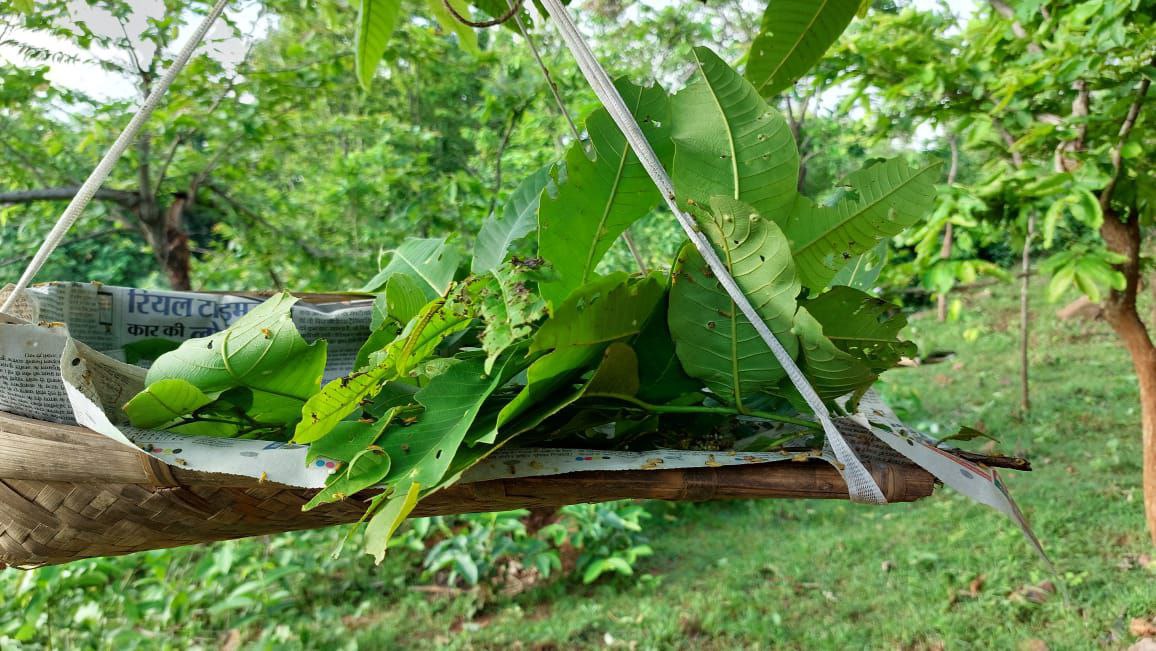
Jharkhand, India – India is one of the world’s largest producers of tassar silk, with major production areas spread across several states, specifically those in forest-dependent areas, including Jharkhand. Tassar silk is produced from silkworms that live in the wild and feed on forest trees. Tassar silk is known for its rich texture and natural golden-brown sheen.
In the village of Dighalpahari, in the Dumka district of Jharkhand, tassar production and trade sustain the livelihoods of indigenous communities, including members of the Dighalpahari Farmer Producer Company Limited. For generations, families in Dighalpahari living close to forest areas have reared silkworms in the forests, earning modest but reliable incomes from the tassar trade. Tassar rearing requires low external inputs and supports forest-based, sustainable livelihoods.
Through the APFP–FO4A program, the Institute for Motivating Self Employment (IMSE) developed a business plan that provided grants to tassar farmers to strengthen their entrepreneurship activities.
The Asia-Pacific Farmers’ Program (APFP) – Farmers’ Organizations for Asia (FO4A) is implemented by the Asian Farmers’ Association for Sustainable Rural Development (AFA) and La Via Campesina (LVC), with funding from the European Union (EU) and the International Fund for Agricultural Development (IFAD). The program aims to strengthen the capacities of farmers’ organizations to provide economic services, advocate for enabling policies, and promote sustainable livelihoods for small-scale family farmers across Asia. The program is implemented in India by the IMSE.
With funding support from the APFP-FO4A program, IMSE conducted capacity-building activities aimed at enhancing farmers’ knowledge and technical skills in tassar cultivation. These efforts focused on improving efficiency, productivity, and overall competence while supporting the long-term sustainability of their businesses. In addition, IMSE facilitated the creation of market linkages for the members of the Dighalpahari FPC. With grant support and continuous technical assistance from IMSE, the project has reached more than one hundred farmers affiliated with the Dighalpahari FPC.
According to the tassar farmers, the support has equipped them with the confidence and skills to expand their tassar cultivation. For many households, this intervention has brought meaningful and lasting improvements to their livelihoods.

Comments are closed