
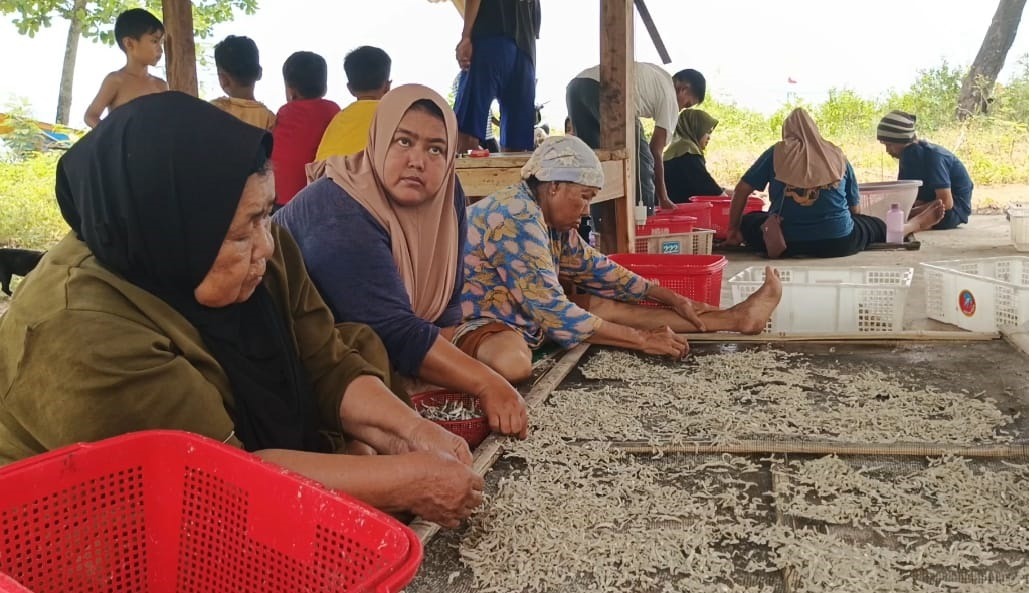
The fishing activities by small-scale fisherfolk in Pandeglang, Banten Province, Indonesia, were affected by a tsunami in 2018. Meanwhile, the issues of illegal fishing and the use of environmentally destructive fishing gear, such as fish bombs and marine biota theft in the Ujung Kulon area, still haunt fisherfolk operating in Sumur District, Pandeglang. The Sumur coastal area is a buffer zone for the Ujung Kulon National Park (TNUK), so fishing activities must comply with the conservation regulations that prohibit illegal exploitation of marine biota such as octopus, lobster, and shrimp larvae. Fisherfolk who violate the rules are subject to sanctions. So, how do small-scale fishers and coastal women maintain their livelihoods while preserving the surrounding ecosystem? Here’s their experience.
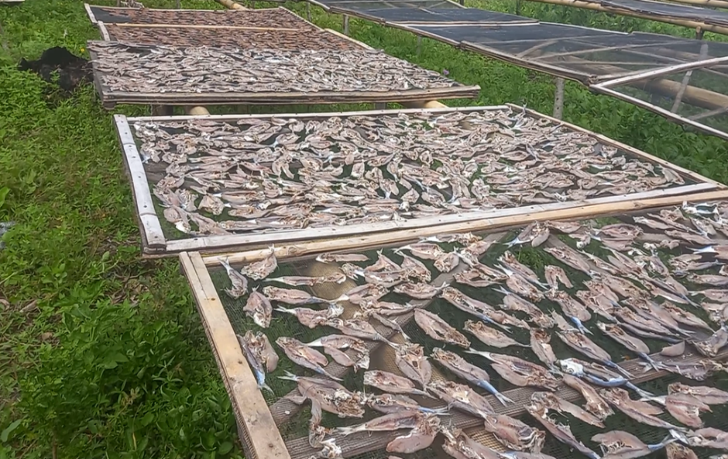
Pandeglang Regency has the longest coastline in Banten Province. Spanning 230 kilometers of coastline, it has significant marine and fisheries potential. According to the Pandeglang Regency Fisheries Service, the total capture fisheries production in Pandeglang Regency was 11,908 tons in the first semester of 2024. This catch is typically higher in the second half due to improved weather conditions for fishing. Most of the marine fish, including anchovies, mackerel, Indian mackerel, ribbonfish, and scad caught by Pandeglang fisherfolk are sent to Tangerang and Jakarta.
Sumur District, one of the districts in Pandeglang Regency, has villages located in the coastal area of Ujung Kulon. The main livelihood of the people in Sumur District is fishing. In addition, they also collect forest honey, especially during high wave seasons at sea.
Sumur District is a key supplier of marine fish in Pandeglang Regency. With its significant marine fisheries potential, many fishers from outside Sumur, even from outside Banten Province (such as Lampung), conduct fishing activities in this area (Ujung Kulon). Conflicts have occurred between locals and outsiders who were using destructive gear such as trawl nets and fish bombs. Yet, clear regulations exist for fishing zones bordering the 44,337-hectare Ujung Kulon National Park (TNUK). Only locals can set nets in specific TNUK locations.
In Sumur District, there are two Fish Auction Places (TPI) owned by the Banten Provincial government, namely TPI Sumur and Tamanjay, but they are no longer in operation. This situation hinders fish supply services for fisherfolk, so many of them sell their catch to large ships at sea, which then take it to TPI Panimbang or TPI Labuan in Lebak Regency, before sending the catch to Tangerang and Jakarta.
The main fish catches in Sumur District are anchovies, ribbonfish, and sardines, mostly caught using lift nets. Meanwhile, catches from net fisherfolks are smaller, despite longer trips. Fishermen land their catches at three fishing ports (TPI) in Lebak Regency: Panimbang, Labuan, and Binuangeun.
The Association of Ujung Kulon Coastal Community and Fisherfolks
Coastal communities in Sumur District are part of the Ujung Kulon Coastal Community Group (RUMPON). Currently, three organizations support RUMPON, namely: Aliansi Petani Indonesia (API) (Indonesian Peasants’ Alliance), Serikat Nelayan Indonesia (SNI) (Indonesian Fisherfolk Union), and Hanjuang Cooperative (which is a member of API) for organizational strengthening and economic development. RUMPON consists of 200 fishermen and 50 coastal women.
Besides fishing, RUMPON members also collect forest honey in Ujung Kulon National Park, marketed through Hanjuang Cooperative. Fresh fish are sold directly to collectors or middlemen.
The volume of fresh fish raw materials produced in 2024 reached 7,023 kg, distributed for fresh consumption and as raw materials for salted fish processing by RUMPON groups.
Coastal communities face challenges such as: (1) if catches are abundant, prices drop drastically; (2) during strong winds and high waves, small fishers can’t go fishing to the sea, reducing income; (3) RUMPON lacks of fish processing facilities; (4) limited access to capital for fish processing and marketing businesses for RUMPON members.
However, RUMPON has opportunities to grow, including: (1) support from API, SNI, and Hanjuang Cooperative; (2) fish processing businesses that can boost small fisherfolks’ income and create jobs for coastal women in Sumur District; (3) demand for fresh and dried fish in tourist areas and villages in Sumur and Cimangu Districts, with potential demand from Banten, Jakarta, and Bandung; (4) abundant catches of certain fish sush as sardines, ponyfish, yellowtail, mackerel, squid, and others.
| The main fresh fish produced in Cigorondong Village, Sumur District, Pandeglang Regency are dominated by local fisherfolk’s catches and from the Ujung Kulon coastal area, including: 1. Anchovy, a small marine fish from the Engraulidae family, with silver-greenish or bluish bodies, about 3 cm long. This is popular types in Indonesia, including jengki anchovy, Medan anchovy, and nasi anchovy. 2. Layur fish (Trichiurus lepturus ) has a long, slender, silver body, found in tropical and subtropical waters. It’s a high-value food fish. 3. Tembang fish (Sardinella fimbriata) from the Clupeidae family, a small pelagic fish that eats plankton and tiny crustaceans common in Indonesia’s coastals and bays. 4. Petek fish, or ponyfish, small, deep-bodied fish from the Leiognathidae family, live in shallow waters. The genus includes Leiognathus, Secutor, and Gazza. 5. Selar fish (Selaroides leptolepis), or yellowstripe scad, from the Carangidae family. Flattened body, small scales, with a signature yellow stripe; common in Southeast Asia’s coastal waters. 6. Lamuru or lemuru fish (Sardinella lemuru), a species from the Clupeidae family. Abundant in the Bali Strait, it’s a key ingredient in Indonesia’s local sardine industry. 7. Jambal fish or patin jambal (Pangasius djambal) is a freshwater fish from the Pangasiidae family. Native to Sumatra, Kalimantan, and Java, it grows over 1 meter and is popular for aquaculture and consumption. 8. Squids are marine mollusks from the Cephalopoda class, known for eight legs, two tentacles, and ink-squirt defense. Squid is a key seafood protein source in Indonesia. |
Support for RUMPON’s main business
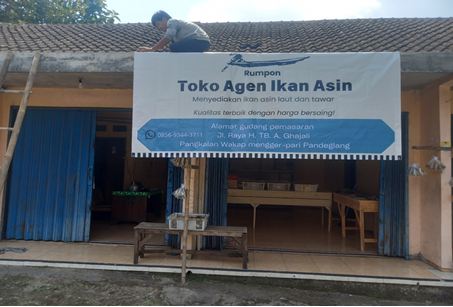
The main business operated by RUMPON is collective dried fish processing. This business focuses on processing low-priced fish caught by small fisherfolks to increase their value through processing, packaging, and distribution.
Through the APFP-FO4A program, RUMPON received support from the Regional Challenge Fund for investment and working capital to develop a fish processing business with cooperative maturity.
The Asia-Pacific Farmers’ Program (APFP) – Farmers’ Organizations for Asia (FO4A) is implemented by the Asian Farmers’ Association for Sustainable Rural Development (AFA) and La Via Campesina (LVC), with funding from the European Union (EU) and the International Fund for Agricultural Development (IFAD). The program aims to strengthen the capacities of farmers’ organizations to provide economic services, advocate for enabling policies, and promote sustainable livelihoods for small-scale family farmers across Asia.
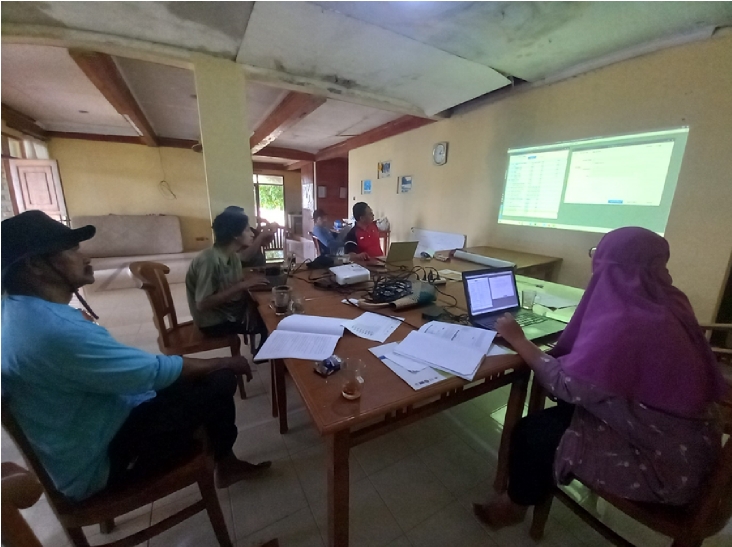
Aside from the business capital, the Aliansi Petani Indonesia, as the National Implementing Agency (NIA) of APFP-FO4A in Indonesia, and the Business Development Officers of the NIA and Regional Implementing Agency (RIA) AFA-LVC provided capacity building for RUMPON members, business development assistance, technical support, and business incubation for RUMPON’s management team and members, including policy advocacy through lobbying, policy dialogues, and multi-stakeholder consultations. These supports aimed to strengthen RUMPON in running cooperative programs and business, hoping to improve coastal communities’ welfare through dried fish processing (salted fish) and its value chain.
| The Challenge Fund program involving RUMPON aims to: 1. Support value chain enhancement and productivity for small-scale fisherfolk in Ujung Kulon, organized by Serikat Nelayan Indonesia (SNI) Sumur. 2. strengthen RUMPON’s economic institutions. 3. Improve access to working capital for small-scale fisherfolk. 4. Increase income for small-scale fisherfolk in Ujung Kulon organized by SNI Sumur. |
Business incubation implementation for RUMPON
The APFP-FO4A program is located in Katapang Village and Cigorondong Village, Sumur District, Pandeglang Regency. The program aimed to develop a business model for marketing sea fish and processing salted (dried) fish in the RUMPON group, consisting of 43 fisherfolks and organizing around 160 small-scale fisherfolks.
RUMPON cooperative’s main business is the fisheries value chain. RUMPON’s products are supplied to household consumers, suppliers, traditional markets, village-level shops, inns, and tourism areas in Pandeglang, Lebak, and other regions.
The cooperative’s capital sources come from Principal Savings, Mandatory Savings, Grants, and liabilities. From January 1, 2024, to December 31, 2024, RUMPON has collected total own capital and liabilities as mush as Rp.345,000,000 (USD 20,000). From June 1, 2024, to December 31, 2024, RUMPON purchased various fish types totaling 20,844 kg worthed Rp.126,177,000 (USD 8,407.80).
Major Challenges During Program Implementation
Extreme weather significantly impacts small fishers’ catches in Pandeglang, including Sumur District. During high waves, strong winds, and prolonged rain, fisherfolks are often reluctant to go fishing to the sea or they can only go a few times a week, whereas normally they go daily. This drastically reduces catch volumes. Weather also affects pelagic fish seasons, put them unpredictable, leaving the fisherfolks with little or no catch. High waves can damage simple boats and fishing gear, leading to lost or damaged equipment and worsening low catches.
Small fisherfolks in RUMPON’s Sumur District adapt to extreme weather by combining strategies for example improving weather literacy, using technology, diversifying businesses, and reducing fishing frequency during high-risk periods.
Fisherfolks and their families boost income with activities of salted fish processing, entrepreneurship, and seasonal farming to reduce dependence on sea catches. They also use covered drying areas and alternative energy-based fish dryers to keep production going during long rainy seasons, preventing catch spoilage.
Fisherfolks also engage in community activities and raise emergency funds. Some groups form savings and loan cooperatives to support members affected by bad weather and stabilize household finances. These strategies help small fisherfolks minimize financial losses, stay safe, and remain productive despite unpredictable weather.
Social and economic impacts
The support from APFP-FO4A for local economic development of Rukun Masyarakat Pesisir Ujung Kulon (RUMPON) involves developing dried fish processing and marketing in Pandeglang Regency, growing into a rural economic ecosystem. Through this program, RUMPON contributes to increasing income and improving livelihoods of coastal women and small fisherfolks.
RUMPON also contributes to improve food and nutrition security in three villages: Tamanjaya, Ujung Jaya, and Cigorondong. This pre-cooperative, led by a fisherfolks’ organization, becomes a key instrument in developing rural economic ecosystems. This is evident in RUMPON’s economic turnover of Rp.231,791,600 (USD 15,452.77). RUMPON manages businesses that increase income for 219 small fisherfolks and coastal women engaged in this ecosystem.
| Key success factors for catches The combination of natural factors and human capabilities plays a significant role in determining the success and sustainability of small pelagic fishing in the Sumur district, Pandeglang. These factors include: 1. Weather and seasonal conditions: extreme weather, high waves, current shifts, and wind patterns affect fishing days and small pelagic fish distribution. The “east monsoon” season often peaks in catches due to high fish concentration. 2. Fishing gear and technology: quality and suitability of tools (nets, tonda hooks, floating barges) determine catches. Proper gear and technology upgrades will boost efficiency and minimize damage. 3. Fisherfolk’s knowledge and skills: reading wind, currents, and signs of fish presence through experience is crucial for optimal fishing spots and timing. 4. Fish migration patterns and environmental factors: Small pelagic fish migration and stock dynamics are influenced by natural factors such as upwelling, plankton, and sea surface temperature changes. |
Increased knowledge and skills
Besides economic and social impacts, the APFP-FO4A program also increases knowledge and skills of Ujung Kulon’s coastal communities. RUMPON and its members gain knowledge on simple technology transfer, hygienic drying techniques, rack usage, and efficient sunlight utilization. They also learn about nutrition and product quality, understanding the importance of maintaining fish quality for safety and nutrition.
In marketing, RUMPON gains skills in branding, packaging, and strategies to reach broader markets. In business management, they learn simple financial recording, cost calculation, and profit analysis. Developing dried fish processing isn’t just about production; it’s also about transforming coastal communities’ knowledge on processing, marketing, and sustainable business management.
Contribution to environmental protection
The RUMPON group’s local economic development program also contributes to reduce fish waste and improve processing knowledge to prevent excess catches to go to waste. With awareness of sustainability, fisherfolks learn to maintain coastal environment quality to ensure fish availability. This fish cultivation and processing development becomes a contributing business for coastal communities around Ujung Kulon National Park, especially in Cigorondong Village, Sumur District. It offers an alternative income source for communities with limited livelihoods due to the conservation area boundary.
The role of women and household income
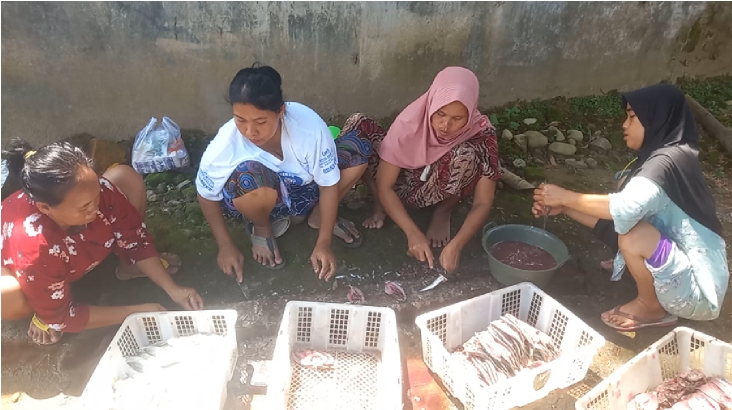
Coastal women are now more active in processing and marketing fishery products, including salted and fresh fish. They are directly engaged as RUMPON managers, processors, and traders. Women’s access to training, capital, and markets has opened up. The Challenge Fund program and village development planning have encouraged women’s engagement in management training, financial recording, and marketing. Coastal women drive food security for fisherfolk’s families, especially during lean seasons, using catches for home industries and local trade.
Coastal women’s income contribution to fishers families at averages as much as 32.8% to 80.6% in Sumur District, exceeding the national average of 64.9%. In some families, women are the main breadwinners, especially during extreme weather or lean seasons. They handle household finances, micro-credit for fisheries, and product logistics to regional and external markets, while youth are also key in advocacy activity and in RUMPON, driving information flow from catch to market.
Conclusion and recommendations
Assistance for RUMPON and fisherfolk’s groups focuses on training in management and fish processing, plus salted fish drying technology. Collaboration with village and district governments involves grant programs like building a breakwater in Cigarondong, though limited in scope. Fisherfolk organizations actively participate in product diversification and marketing training, adding value to catches and strengthening local and regional networks.
Moving forward, we need to maximize assistance and consolidate fisherfolks’ organizations, expanding support to all groups, not just large organizations like RUMPON. Ongoing training in business management, production recording, and building stable market networks for fresh and processed products is crucial.
RUMPON and fishers’ groups should collaborate closely with village, district goverments, and Ministry of Maritime Affairs and Fisheries through regular development forums. Cross-sector MoUs on logistics, marketing, and infrastructure development (bagan/floating barges, cold chain, and fish auction facilities) are also essential.
To sustain fresh fish production and sales, RUMPON should produce modern packaged chilled/frozen fish with safe ready-to-eat labels for local markets, supermarkets, and restaurants. They should follow HACCP and Indonesian National Standard (SNI standards) for production, processing, and packaging safety, and digital promotion training to expand premium product market access.
Further empowerment can be achieved through education, advocacy, land-use planning (catchment areas), joint production and collective marketing governance, cross-sector collaboration, modern storage facilities, and packaging innovations. This will lead Sumur’s fisherfolk towards modern, efficient, and sustainable fisheries management.



Comments are closed