



Central Java, Indonesia – The Jaringan Masyarakat Tani Indonesia (Indonesian Farmer Community Network) (JAMTANI) has been at the forefront of encouraging corporate social responsibility (CSR) programs that promote renewable energy and create self-sufficient villages. Through the APFP-FO4A program, JAMTANI has implemented one of its initiatives on Nusakambangan Island, in Cilacap Regency.
According to Kustiwa Adinata, Chairman of JAMTANI, the initiative aims to strengthen the role of farmer organizations in society, particularly among smallholder farmers living in remote areas.
“In principle, people, especially smallholder farmers, have a strong desire to change their destiny and improve their economic situation,” Kustiwa explained. “However, they are often constrained by limited resources, especially human resources. Through this program, farmers are trained to understand and identify their own problems, and to jointly formulate solutions with the help of facilitators.”
The learning process uses participatory methods such as Participatory Rural Appraisal (PRA) and Risk Assessment, where participants create “problem trees” to identify key issues and objectives for group programs. This approach encourages mutual cooperation, fairness, responsibility, respect, and critical thinking, which are essential values for building stronger, self-reliant communities.
Kustiwa also emphasized the importance of private sector involvement. CSR programs, he noted, play an important role in channeling company funds to assist surrounding communities. Yet, remote villages often go unnoticed by these programs. The Capacity Building Program addresses this gap by helping smallholder farmers improve their welfare through better access to needed resources and closer collaboration with both the private sector (CSR programs) and local governments (APBD funds). JAMTANI carries this out through policy advocacy involving local governments, private companies, and universities.
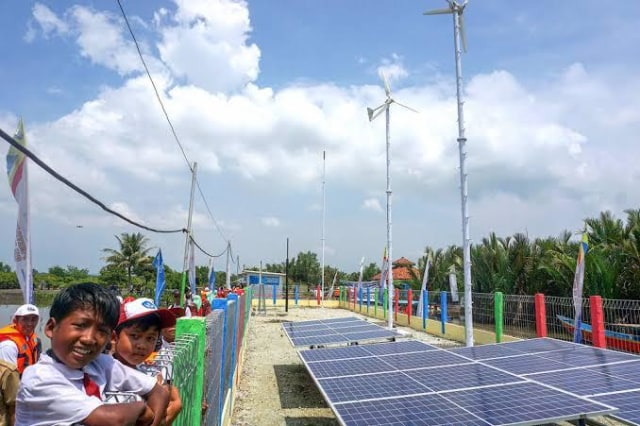
A concrete example can be found in Bondan Hamlet, located in Ujung Alang Village, Kampung Laut Subdistrict, Nusakambangan Island, Cilacap District, Central Java. The hamlet, home to 72 households, was once a remote community without electricity, even though a multinational company, PT Pertamina, operates on the same island.
Through JAMTANI’s facilitation, the local community partnered with PT Pertamina to build 58 solar panels and four windmills. These now provide 500 watts of electricity per household and 1,500 watts for home industry groups.
The results are transformative. Villagers can now enjoy electric lighting, watch television, and children can study comfortably at night. Some families have even started processing their aquaculture products using electric tools, producing ice, and storing fish in freezers.
“Initially, the community identified their main problem, which is the absence of a PLN (State Electricity Company) network due to high infrastructure costs,” Kustiwa said. “By recognizing their local potential, including strong and consistent winds and abundant sunlight, they proposed a solar and wind energy solution to PT Pertamina. The company invited them to present their proposal, reviewed the site, and supported the project’s implementation.”
According to Kustiwa, the Capacity Building Program will continue to be strengthened to help more remote communities improve their conditions. The goal is not only to raise living standards but also to empower marginalized groups, enabling them to gain the confidence and skills needed to negotiate and collaborate effectively with key stakeholders.
“Another key reason for strengthening these communities is their limited ability to analyze problems and recognize opportunities,” he added. “They often lack local role models or innovators. That’s why the presence of community organizers and facilitators is essential, to help them unite, analyze their issues, and work collectively toward solutions.”
Looking ahead, Kustiwa stressed the importance of regeneration to build stronger, sustainable farmer organizations guided by their agreed constitutions and by-laws. The target groups for this initiative are low-income farmers in remote villages who face multiple challenges, including the impacts of climate change, and often lack access to both government and private sector programs.
Through these efforts, JAMTANI remains steadfast in its commitment to improving the welfare of smallholder farmers and securing a brighter future for their children.
The APFP-FO4A program is implemented by the Asian Farmers’ Association for Sustainable Rural Development (AFA) and La Via Campesina (LVC), with funding support from the European Union (EU) and the International Fund for Agricultural Development (IFAD). The program aims to strengthen the capacities of farmers’ organizations to provide economic services, advocate for enabling policies, and promote sustainable livelihoods for small-scale family farmers across Asia.

Comments are closed