

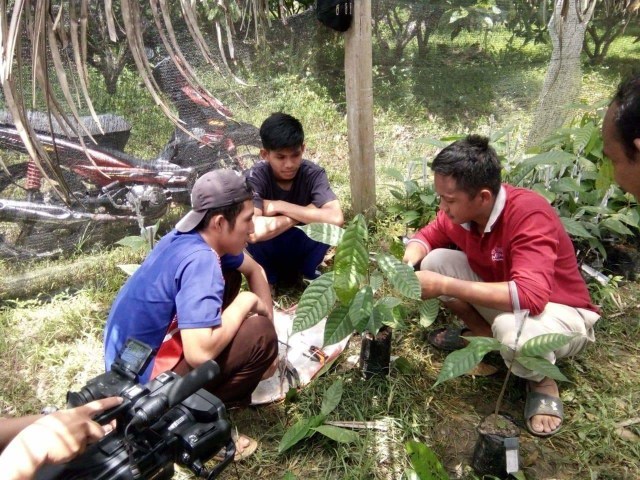
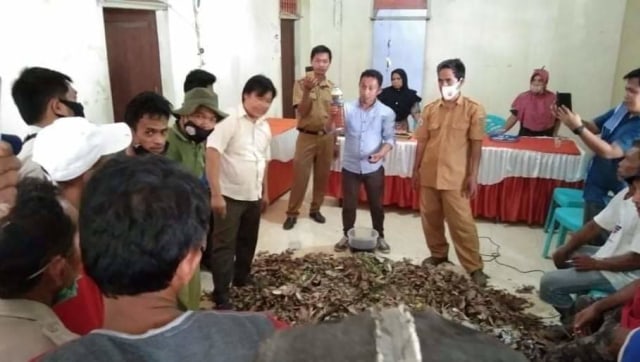
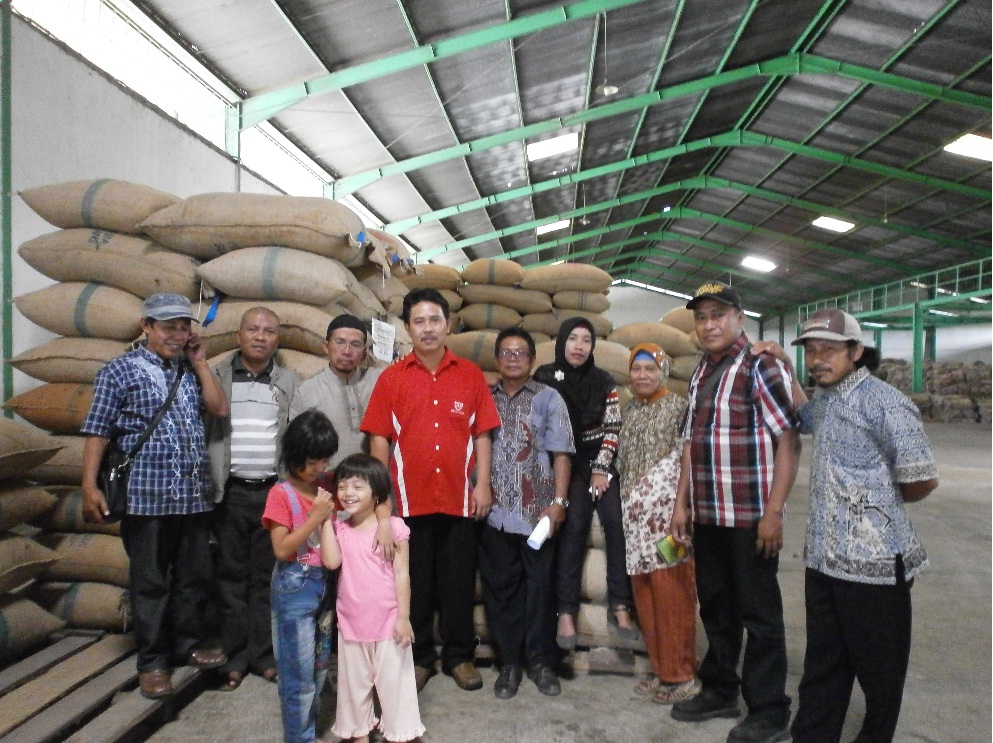
West Sulawesi, Indonesia – In Polewali Mandar Regency, West Sulawesi, Indonesia, cocoa farmers are working together to change the face of the cocoa industry. The Amanah Farmer Organization and Mitra Agribisnis Mandiri Amanah, producers of cocoa in the region, are leading innovations aimed at improving farmers’ welfare and ensuring the sustainability of the cocoa commodity. This initiative is supported by the Aliansi Petani Indonesia (API) (Indonesian Peasants’ Alliance) through the APFP-FO4A program and in collaboration with Rikolto Indonesia and the local government.
Hasani, Chairman of the Sustainable Cocoa Development Unit, shared that the establishment of cooperatives plays a crucial role in helping farmers sustainably manage and develop cocoa commodities. One of their strategies includes integrating cocoa production with goat farming and other agribusiness ventures, creating multiple income streams for farmers.
“Our objective is for this cooperative to become a place of learning and a hub for collective marketing of farmers’ commodities, both for members and non-members,” Hasani explained. “West Sulawesi has about 146,000 hectares of cocoa plantations, but only around 1,431 farmers from nine sub-districts have joined the cooperative so far. That’s just about 1,431 hectares. We still face challenges in capital to buy all their products.”
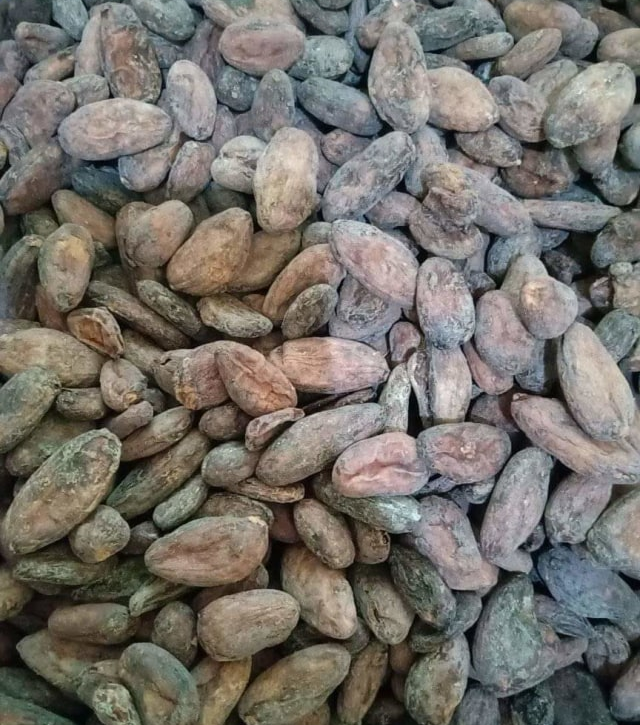
Through the APFP-FO4A-supported cooperative mentoring program, Amanah Cooperative has gained access to capacity-building institutions that support farmer groups in developing an inclusive and specialized cocoa market. Among their notable innovations is the formation of cocoa clusters in different regions. Each cluster identifies and develops its own flavor profile and quality grade—AA, A, or B—based on market demand.
“Previously, farmers would sell raw cocoa beans right after harvest. Now, we have shifted to a fermentation system,” Hasani said. “Through cluster-based fermentation, we can improve quality and identify which beans produce grade AA, A, or B cocoa.”
Looking ahead, Hasani emphasized that the next major focus will be strengthening the marketing sector. By enabling farmers to connect and partner directly with buyers through cooperatives, the farmers can secure better prices and fairer trade.
Currently, local market segmentation is often dominated by collector traders who purchase cocoa at low prices, sometimes undervaluing the quality of farmers’ produce. Despite these challenges, Amanah Cooperative has already distributed cocoa to markets beyond the city and even to other islands.
Hasani remains optimistic. “We believe that Amanah Cooperative can bring our cocoa to compete globally, exporting to Europe, America, and the Netherlands. These international markets offer greater opportunities for our farmers’ welfare,” he said.
For Hasani and the cooperative, the mission goes beyond production—it’s about realizing measurable welfare for farmers.
“The welfare of farmers is not just a slogan,” Hasani concluded. “It can and should be measured by the added value they gain from selling higher-quality cocoa.”
The APFP-FO4A program is implemented by the Asian Farmers’ Association for Sustainable Rural Development (AFA) and La Via Campesina (LVC), with funding support from the European Union (EU) and the International Fund for Agricultural Development (IFAD). The program aims to strengthen the capacities of farmers’ organizations to provide economic services, advocate for enabling policies, and promote sustainable livelihoods for small-scale family farmers across A

Comments are closed