
Statement and Recommendations of Farmers’ Organizations at the Transformative Partnership Platform on Agroecology (Agroecology TPP) Annual Members Forum
March 31 – April 4, 2025 | Hanoi, Vietnam
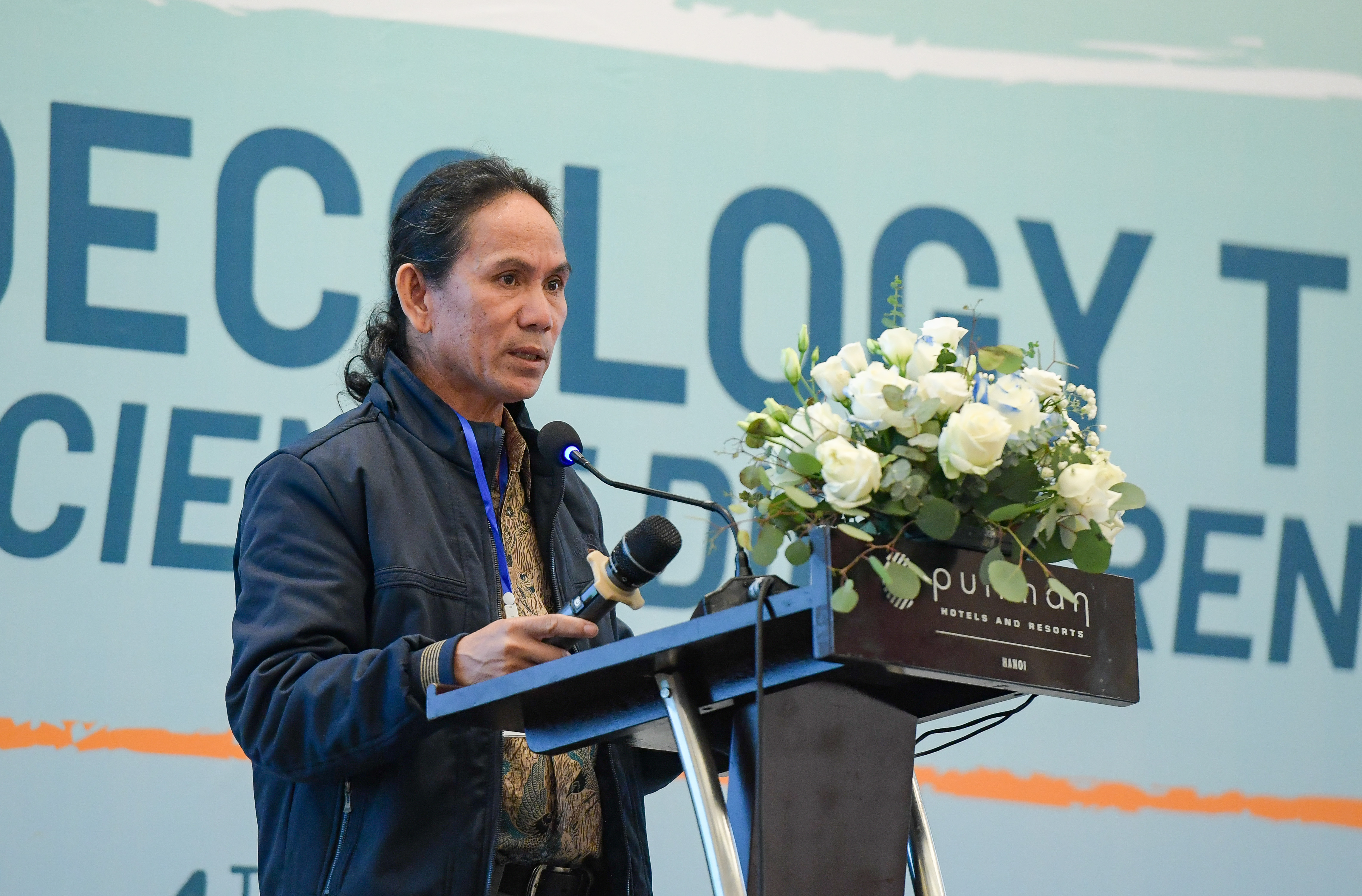
Delivered by Jonjon Sarmiento, PAKISAMA
Family farmers are not just food producers but knowledge producers and solution providers. Our organizations and cooperatives are our platforms for collective actions, enabling us to contribute to sustainable rural development. Our organizations serve as our means of engaging in decision-making processes and contributing to transforming food systems through agroecology and sustainable resource management.
Smallholder farmers across the globe are vital in providing a diverse range of food options for the region. However, we are facing numerous challenges. Given the impact of climate change, we all agree that the “business as usual” approach is no longer viable.
Agroecology should be actively supported and expanded to encourage diverse food production, restore degraded natural resources, and tackle the challenges posed by climate change. Achieving this goal requires ongoing collaboration among farmers, researchers, extension workers, development partners, and continuous policy discussions. Additionally, it is important to educate consumers about food production methods in order to increase the demand for agroecologically produced food.
Research areas or topics
As a network of farmers, we have organized discussions and consultations and have identified potential research areas and questions that will serve as the basis for collaborative or participatory research and innovation aimed at enhancing climate resilience through agroecology.
As mentioned yesterday, the UN has declared 2026 as the Year of the Woman Farmer and the Year of Rangelands and Pastoralists. The TPP, or its members, can play a significant role in showcasing the contributions of women farmers, particularly in how they embody agroecological principles and address the challenges they face. Additionally, it would be beneficial to highlight how agroecology supports rangelands and pastoralists.
The consultation, conducted as part of the TPP One Million Voice Initiative, identified the effects of climate change on small-scale farmers and their adaptation strategies as a priority area due to its direct impact on farmers’ livelihoods. Agroecology can serve as a significant focus for farmers and their organizations in adapting to these challenges. Potential research areas include identifying and promoting climate-resilient agroecological practices at the village and local levels, conducting farm-level assessments for farmers’ organizations, and assessment of climate change manifestations through observations and measurements, such as changes in weather patterns and precipitation rates. These observations can facilitate the development of targeted interventions. Additionally, ideas for research could involve testing and selecting crop varieties, as well as assessing their suitability to local conditions. The information gathered from these efforts can be analyzed and translated into actionable interventions and programs. From 2021 to 2023, AFA, the Pacific Island Farmers’ Organization Network, and other partners participated in a perception survey regarding traditional and neglected underutilized food crops. We conducted our own survey and translated the findings into a Farmers’ Declaration. This declaration was further translated into local languages and used by national farmers’ organizations to engage with government agencies. One of the proposed actions includes the participatory development of solutions and innovations to address challenges related to quality seed production, cultivation, processing, marketing, and packaging of traditional varieties and selected underutilized crop species, such as root and tuber crops and nutritious leafy vegetables. The goal is to entice consumers and increase the market value of these crops. We also aim to research new methods and technologies for all aspects of forgotten crops. It is essential to develop technologies that are suitable and friendly for women. For example, small machinery for processing grains like millets and indigenous crops can save women a significant amount of time and reduce their workload. Additionally, community-based storage facilities at the village level are urgently needed.
Additionally, these are the areas that several national farmers’ organizations would like to explore further with researchers and their organizations:
- Agroecological approaches (not only limited to production) that will enable small-scale farmers adapt to climate change faster
- Agroecological approaches adapted to mountain ecosystems
- Community-level approach to sustain agroecological approaches
- Options to transform large scale monocrops using agroecology models, especially in cassava, maize, and sugarcane
- Alternatives to reduce burning in farming
- Sustainable coffee-based systems in different context
- Different strategies and models that can be employed to ensure the sustainability of agroecological practices to guarantee the sustainability of agroecological practices
- Mechanisms and support services FOs, cooperatives, and local organizations must provide to guarantee the sustainability of agroecological practices
Considerations in doing Participatory action research and community-based participatory research
Participatory action research and community-based participatory research is essential to address potential issues. The experience of the Lao Farmer Association highlights that a major challenge in conducting community-based participatory research and learning—especially those that require field testing and trials—was convening farmers. This difficulty often arose because meetings were scheduled during planting and harvesting times.
On challenges of participatory action research and community-based participatory, while we advocate for participatory action research and community-based participatory research, it is important design them with the farmer groups to be able to address possible challenges. Experience of Lao Farmer Association showed that the main challenges in conducting community-based participatory research and learning that requires field testing and trial was convening farmers because sometimes it is scheduled during the same time as the planting and harvesting time. One of the solutions employed was identifying the most appropriate time, for example, a full moon date, when everyone goes back home and doesn’t work for an extended period during the day or early morning or evening for meetings.
Farmers often hesitate to adopt and implement new practices in their fields due to concerns about potential losses that other farmers have faced during similar trials. To address this issue, developing strategies that compensate for farmers’ losses is crucial. Additionally, conducting initial trials on a small scale before implementing new practices across the entire field can help mitigate risks and encourage adoption.
There is lack of interest among youth to join participatory research and learning activities. Thus, there should be programs designed specifically to attract youth to participate in innovation development and the creation of enterprises out of the learning from the research activities, fora example seed enterprises.
Call for collective actions
We recognize the openness of TPP to promote as a co-creation an important principle that connects many of the agroecology principles.
To TPP partners, governmental and policy agencies, donors, NGOs, and similar networks or platforms, we urge your support in assisting us:
- Secure our rights and control over natural resources, especially lands, waters, and forests. These resources are essential for making long-term investments in diversifying our farms through agroecological methods and strengthening their climate resilience.
- Invest in smallholder farmers and our organizations so we can be empowered to govern, manage and sustain our enterprises and services to our members to sustain agroecological approaches at the farm level.
To researchers:
- Conduct your experiments, research, and innovation development in a participatory manner, with the equal participation of family farmers through their organizations from the design and formulation, implementation, monitoring and evaluation of the research, using in-site approaches as much as possible.
- Translate research outputs to stimulate demand for agroecologically produced food from consumers and the wider public, which in turn will support the marketing of our products.
- Include representatives of family farmer organizations and/or cooperatives in the governance structures of research programs.
We believe that with a sustained multistakeholder partnership with family farmers, we can effectively support the scaling up of agroecology, build the climate resilience of millions of small-scale women, men, and young farmers, and collectively contribute to sustainable food systems transformation at the local and country levels while also contributing to the Sustainable Development Goals.

Comments are closed