
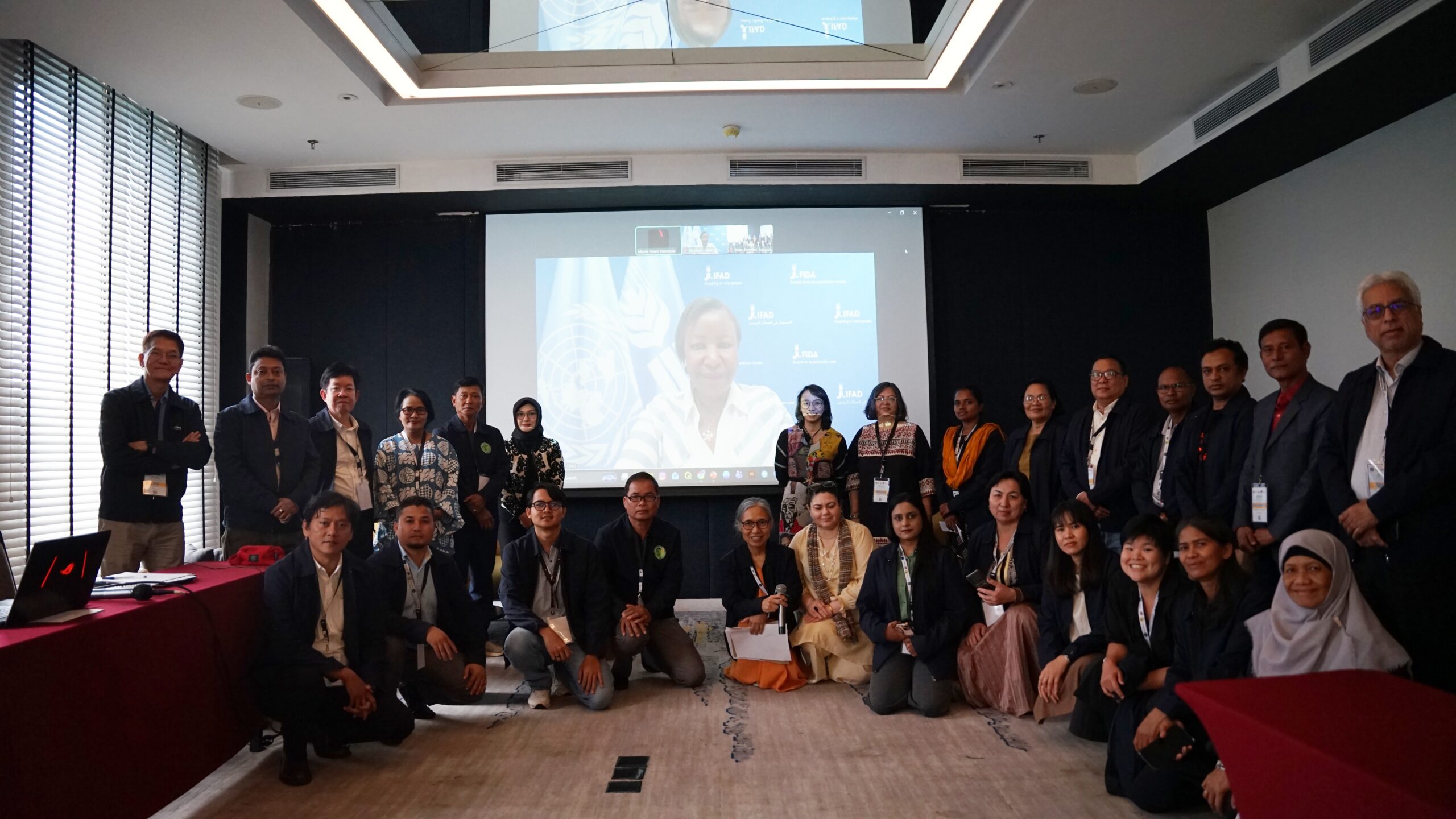
Documentation
APFP-FO4A Regional Wrap-Up
Panel Discussion on Agricultural Cooperative Enterprise Development and Rural Finance
Theme: “Strengthening Farmer Organizations for Inclusive Growth”
25 February, 2026 | Jakarta, Indonesia
I. Rationale
Cooperative enterprise development and access to appropriate rural finance are critical pillars for building inclusive, resilient, and market-oriented agricultural systems in Asia. Farmer organizations (FOs) and cooperatives play a dual role—as economic enterprises that engage in value chains and as collective institutions that enable smallholders to access markets, services, and finance. However, many cooperatives continue to face constraints related to limited capital, weak enterprise capacity, and inadequate linkages with formal financial institutions.
Under the Asia-Pacific Farmers’ Programme/Farmers’ Organizations for Asia (APFP-FO4A), significant efforts have been made to strengthen cooperative enterprises and improve rural financing models that respond to the needs of farmers and agribusiness-oriented cooperatives. These experiences demonstrate how enterprise-oriented cooperatives can become bankable, sustainable, and impactful drivers of rural livelihoods.
This panel discussion aims to share concrete experiences and lessons from APFP-FO4A partners on cooperative enterprise development and rural finance, while engaging development partners and financiers on pathways for scaling, investment, and collaboration. The session will emphasize practical approaches that link enterprise development, governance, sustainability, and access to finance.
II. Objectives
1. Strengthening Cooperative Enterprises as Engines of Rural Finance
Share experiences and best practices on how cooperative enterprise development enhances access to finance, improves market participation, and strengthens rural livelihoods.
2. Making Cooperatives Investable and Financially Sustainable
Discuss strategies that improve cooperative bankability, including governance, business planning, financial management, and sustainability standards.
3. Partner Pathways for Scaling Cooperative Enterprise Development and Rural Finance
Highlight how development partners and financiers can support cooperative enterprises through programs, investments, and long-term partnerships.
III. Presentations
Presentation 1: National Association of Mongolian Agricultural Cooperatives (NAMAC)
Presented by: Byambatseren Dorjsuren, Sr. Officer-In-Charge of the Program and Project, NAMAC
Key Highlights
- Cooperative investability depends on strong governance, transparent financial management, and credible institutional systems.
- Viable business models, financial discipline, and ESG compliance are critical for attracting investors and ensuring long-term sustainability.
- Value addition, market linkages, and access to finance are key drivers of cooperative growth and member income.
Recommendations
- Strengthen governance through clear institutional roles, transparent bylaws, regular audits, and internal control systems.
- Develop robust business plans, standardized accounting systems, and climate-resilient and inclusive cooperative practices.
- Support value chain integration, tailored rural finance, blended financing mechanisms, and long-term partnerships with development and private sector actors.
Facilitators’ Insights on NAMAC’s Presentation:
- Highlighted key elements for effective cooperative enterprise development, emphasizing strong institutional systems and support mechanisms for cooperatives.
- Emphasized the importance of creating an enabling environment, particularly through policy advocacy that has led to policy improvements supporting cooperative enterprise initiatives.
- Shared NAMAC’s sustainable financing model, where a special grant fund was established using the reflows of project funds, allowing business financing to continue and expand beyond the initial project support.
- Demonstrated how NAMAC has helped build credit histories for cooperatives and their members, with programs such as ARISE strengthening beneficiaries’ financial track records and credibility with financial institutions.
Presentation 2: SANASA International
“Promoting Cooperative Enterprises and Inclusive Rural Financing Models”
Presented by: Samadanie Kiriwandiniya, Managing Director, SANASA Int’l
Key Highlights
- Supporting farmers’ transition from individual credit access to organized cooperative enterprise development, including tailored agricultural loans and business planning support.
- Facilitating value chain integration, where cooperatives mobilize member capital, invest in value addition, and support quality improvement and market-oriented production.
- Promoting risk-sharing financing mechanisms through agriloans, challenge funds, cooperative investments, and partnerships with banks and insurance providers.
Recommendations
- Continue strengthening cooperatives through governance reforms, institutional capacity building, and professional management systems.
- Expand business planning, value chain investments, and cooperative-led processing and marketing initiatives.
- Scale up blended finance mechanisms and financial partnerships to expand access to capital while managing risks for farmers and cooperatives.
Facilitator’s Insights on SANASA’s Presentation:
- Examined cooperatives across different stages of enterprise development, recognizing that needs evolve over time.
- Highlighted that risk profile and enterprise objectives determine the type of support required at each stage.
- Suggested a key lesson for future projects: consider both the project design and the specific needs of cooperatives at their current stage of development.
III. Panelists/Reactors
Panelist 1: Luhur Pradjarto (ACEDAC)
Key Highlights
Cooperative development and livelihoods: ASEAN Center for the Development of Agricultural Cooperatives (ACEDAC) promotes agricultural cooperative development to improve small farmers’ and fishers’ livelihoods through sustainable practices, capacity building, research, and regional knowledge exchange.
Market access and value chains: Strengthens business linkages, investments, and partnerships among cooperatives, producers, and market actors to improve food marketing systems and regional competitiveness.
Support for small producers and SMEs: Helps small-scale producers improve productivity and competitiveness through access to technology, finance, extension services, and integration into modern value chains.
Capacity building for cooperative leadership: Supports training, exchange visits, and policy research to strengthen cooperative management and leadership.
Public–private partnerships and digital innovation: Promotes PPPs and digital technologies (e.g., smart farming, data analytics) to enhance efficiency, sustainability, and market connectivity.
Panelist Reaction to the Presentation
- Noted that the issues raised reflect similar experiences across countries, including Mongolia.
- Emphasized the need for integrated agricultural programming from production to market, as seen in Sri Lanka.Highlighted the critical role of financial institutions in supporting cooperative and agricultural development.
- Shared challenges in establishing regional financing mechanisms for SMEs within ASEAN, particularly in mobilizing donor resources and managing funds across member countries.
- Expressed support for initiatives by Asian Farmers’ Association (AFA), including advocacy for a regional fund for farmers’ organizations and stronger institutional partnerships.
- Stressed the importance of helping farmers establish legally recognized organizations and cooperatives to strengthen market linkages.
Synthesis
Strengthening agricultural cooperatives in ASEAN requires empowered farmer organizations, improved market integration, access to finance, and stronger regional collaboration to enhance smallholder competitiveness and sustainability.
Panelist 2: Mr. Affan Fimansyah – AgriCord/ASIADHRRA
Key Highlights
- Strengthening farmer organizations and cooperatives:
AgriCord, a global alliance of agri-agencies mandated by farmers’ organizations, works to strengthen smallholder cooperatives as key actors in resilient and inclusive agricultural supply chains. - Improving access to finance for smallholders:
Recognizes that smallholder farmers are major investors in agriculture but face barriers to finance due to high climate and market risks. AgriCord works with farmer organizations and financial institutions to develop tailored financial solutions combined with technical assistance and organizational strengthening. - Supporting competitive and sustainable value chains:
Helps farmer organizations improve productivity, access markets, and comply with sustainability and traceability requirements, including emerging ESG and deforestation-free supply chain standards. - Promoting partnerships and innovation:
Encourages collaboration among cooperatives, financial institutions, governments, and market actors, while also leveraging digital tools and advisory services to improve financial inclusion and agricultural services.
Panelist Reaction to the Discussion:
- Emphasized that smallholder farmers are significant investors in agriculture, yet they are often viewed only as producers or beneficiaries rather than economic actors.
- Noted that limited credit history and high risk exposure continue to restrict farmers’ access to finance, a challenge observed across many countries.
- Highlighted the need for financial institutions to develop more suitable financing approaches that respond to the realities of smallholder farmers.
- Stressed that policy advocacy must be complemented by effective implementation and inclusive partnerships to create real impact.
- Cautioned against long-term dependence on grants, emphasizing that cooperative development should ultimately be sustained as viable business enterprises.
Synthesis:
Strengthening smallholder cooperatives requires tailored financial solutions, strong farmer organizations, effective partnerships, and supportive policies to enable farmers to participate competitively in sustainable agricultural value chains.
IV. Plenary Discussion: Participants Questions/Reflections and Responses from Presentors
Question 1 (Philippines) : Sustainability of externally funded initiatives
Many cooperatives rely on external funding to support enterprise development and access to finance. The participant asked: how can these organizations sustain their initiatives and continue providing benefits to members once donor funding declines or ends?
Responses from the Presentors/Panelists
AgriCord:
- The concern is valid, and indeed, external funding is not permanent—market limitations exist, and donor support will eventually end.
- Cooperatives should focus on generating their own income and building sustainable business models.
- Progress can be made through small, incremental steps, which collectively contribute to long-term success. (“Bandwagon of Success”)
- While the exact timeline is uncertain, the emphasis is on continuing to build and grow the cooperative despite challenges.
SANASA:
- Cooperatives should plan for sustainability from the beginning, rather than waiting until funds run out.
- Grants and donor funds should be treated as seed capital, not as a permanent source of income. Even strong cooperatives must be cautious of becoming dependent on grants or developing a “grant mindset.”
- Cooperatives must comply with donor requirements and complete projects properly, but also focus on building independent financial resilience for long-term operations.
NAMAC:
- In Mongolia, cooperative law requires a risk management fund, and cooperatives are also encouraged to maintain their own development funds, though the latter is not mandatory.
- Cooperatives are trained on managing finances effectively, including grants and risk management funds, because relying solely on grants can lead to financial mismanagement and even bankruptcy once projects end.
- NAMAC emphasizes the use of loans over grants whenever possible, as loans encourage accountability and commitment, ensuring cooperatives meet their financial obligations.
- A robust financial system and strong financial management are key to the long-term sustainability of cooperatives.
Question 2 (Philippines) – Navigating regulatory requirements
While farmer organizations aim to move toward commercialization and value-added enterprises, they face increasing regulatory requirements in global markets, such as the EU Deforestation Regulation (EUDR) and other environmental and product compliance standards. The participant asked: how can cooperatives comply with these regulations while still improving farmers’ incomes and maintaining access to finance?
Responses from the Presentors/Panelists
AgriCord:
- Markets and regulatory frameworks, such as the EU Deforestation Regulation (EUDR), should be approached as stakeholders for dialogue, not just constraints.
- Cooperatives must strengthen their internal capacities before targeting specific markets and ensure they can meet the required standards.
- Compliance is a continuing process; cooperatives should regularly assess their ability to meet market and regulatory requirements.
- Success depends on careful capacity assessment, negotiation, and strategic engagement with both markets and regulators.
SANASA:
- Cooperatives need to see the big picture: markets may not always be stable or guaranteed.
- Farmers should be trained to meet compliance standards while maintaining sustainable practices and biodiversity.
- Focus should remain on feeding local communities sustainably before pursuing income from external markets.
- Engagement with global markets is valuable, but it must not compromise local food security or the well-being of cooperative members.
- Strategic planning and smart enterprise development are essential for balancing sustainability, market access, and income generation.
Question/Comments (Indonesia): Cooperative Roles in Finance, Markets, and Rural Livelihoods
- Cooperatives support fair pricing: While farmers can sell their products individually, cooperatives help ensure fair market prices and stronger bargaining power.
- Farmers as investors: Smallholder farmers are the primary investors in their farms, but many lack independence and rely on middlemen for market access.
- Access to finance: Financial institutions often provide credit only to mature cooperatives, highlighting the importance of tailored support for developing cooperatives.
- Role of AFA and investment strategy: Funds from the Asian Farmers’ Association (AFA) can catalyze cooperative growth, improving member incomes and enabling both internal and external investment.
- Catalyzing rural ecosystems: Cooperatives should act as drivers of rural development, leveraging member businesses to strengthen local agricultural ecosystems.
V. Synthesis based on the Guided Questions
Key Insights / Question
How can cooperative enterprise development enhance access to finance, strengthen market participation, and improve rural livelihoods at scale?
Synthesis of Panel Recommendations / Strategies
- Cooperatives aggregate smallholder producers, improving bargaining power and fair pricing.
- They enable farmers to leverage internal and external resources while mitigating risks
- Strengthened cooperatives facilitate market integration, compliance with standards, value chain participation, and improved rural incomes.
Key Insights / Question
What practical strategies and reforms are needed to make cooperatives more bankable, financially sustainable, and attractive to investors?
- Establish strong governance, transparent decision-making, and accountable financial systems (risk management and development funds).
- Develop robust business plans with clear revenue models, cash flow projections, diversification, and market assessments.
- Adopt financial discipline and sustainability standards, including ESG compliance, traceability, and climate-smart practices; treat grants as seed capital and promote responsible use of loans.
Key Insights / Question
What pathways can development partners, financial institutions, and governments pursue to scale cooperative enterprise development?
- Support capacity building, institutional strengthening, and technical assistance to professionalize cooperatives.
- Promote public–private partnerships, blended finance, and long-term investments while maintaining cooperative ownership and democratic governance
- Encourage regional collaboration, policy advocacy, and digital innovations (smart farming, traceability, financial technology) to expand market access, compliance, and sustainable growth.