
Background: A woman, a farm, and a mission
Every harvest begins with a seed.
But the story of Pestales Agriculture Cooperative began with something else—a question.
Why do the people who work the hardest often earn the least?
I am Jenalyn A. Entoy, Chairperson and Founder of Pestales Agriculture Cooperative, a grassroots social enterprise committed to empowering small-scale farmers and fishermen in the Philippines.
Our work focuses on connecting farmers to markets, expanding their access to government programs and funding opportunities, promoting sustainable and organic agriculture, and helping communities build more resilient livelihoods.
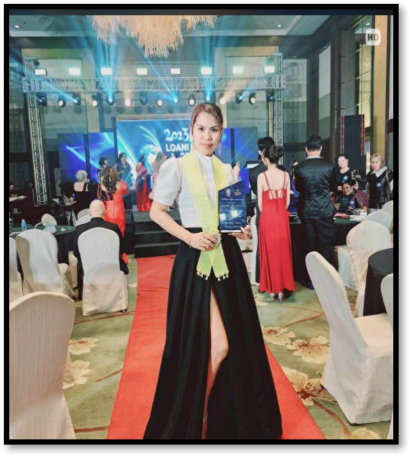
Today, Pestales manages a 6.4-hectare farm and serves as an accredited TESDA Farm School offering Organic Agriculture Production NC II. We were recognized as the first Certified Organic Participatory Guarantee System (PGS) Group in Cebu and the third in Central Visayas in 2024. In 2025, we became an Organic Certifying Body, strengthening our commitment to advancing organic agriculture. I was also honored with the International Filipino Leaders Award by Ladies of All Nations, Inc. in 2023.
But these achievements are not where our story begn.
Before the farm, before the recognition, before the programs and partnerships, there was simply a woman who witnessed farmers struggling—and decided that she could not remain silent.
Challenge and opportunity: When a farmer’s hard work was worth only 50 centavos
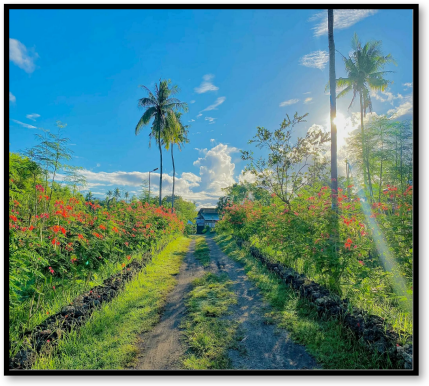
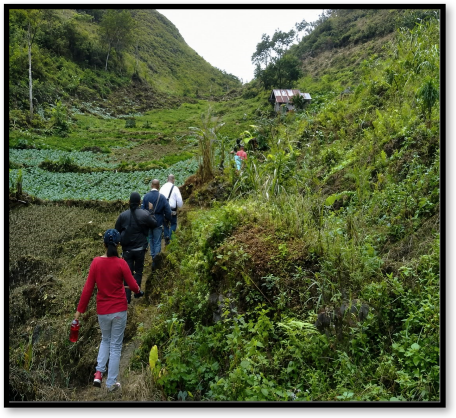
Our advocacy began with a visit to Dalaguete, Cebu, known as one of Cebu’s vegetable baskets.
What we saw there was difficult to forget.
Farmers worked long hours under the sun. They planted, cultivated, harvested, sorted, and transported their crops. They invested their money, time, strength, and hopes into every harvest.
Yet, when it was time to sell, many farmers had little control over the price of their own produce.
Middlemen could purchase their vegetables at prices that barely reflected the value of their labor.
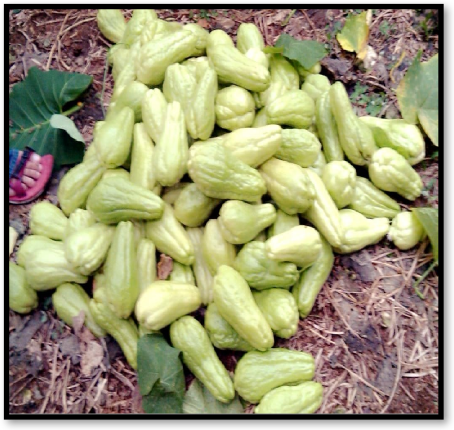
Sometimes, chayote was bought for as little as 50 centavos per piece.
Fifty centavos.
For someone looking at a vegetable in a market, it may seem like an insignificant amount.
But behind that piece of chayote was a farmer who had spent weeks preparing the land, planting, caring for the crop, harvesting it, and carrying it to market.
Behind that farmer was a family.
Behind that family were children who needed food, education, and a future.
That 50-centavo chayote represented something much bigger than its price.
It represented an agricultural system in which the people carrying the greatest risks could have the least power.
Seeing this reality broke our hearts and left us with a question:
What can we do to help farmers gain greater control over their livelihoods?
That question became the foundation of Pestales Community.
We realized that the problem was not that farmers were unwilling to work.
They were already working hard.
The problem was access.
Access to fair markets.
Access to information.
Access to government programs.
Access to funding.
Access to technology and training.
And, most importantly, access to a voice.
Many farmers were eligible for government programs, agricultural support, grants, and private foundation funding. Yet these opportunities often remained beyond their reach because applications required proposals, documentation, and processes they struggled to navigate. Some had limited literacy. Others simply did not know these opportunities existed.
That was the opportunity we saw.
We did not want merely to increase farmers’ income.
We wanted to open doors that had been closed to them for too long.
INNOVATION AND SOLUTION: BUILDING A FAIRER PATH FROM FARM TO TABLE
We knew that we could not simply eliminate middlemen.
They are part of the agricultural value chain, and we understood that the solution was not to wage war against them.
Instead, we wanted to give farmers choices.
We wanted to create stronger connections between farmers and consumers so that producers could have greater bargaining power and retain more of the value created by their labor.
But we also discovered another problem.
Even when farmers successfully produced crops, there were times when they produced more than the market could absorb.
During periods of oversupply, vegetables could spoil before they were sold.
Farmers lost income.
Food became waste.
Months of hard work disappeared.
So we asked another question:
What if excess harvest could become an opportunity instead of a loss?
Our answer was value addition.
Instead of selling raw agricultural products alone, we began developing ways to process them into high-value products with longer shelf lives.
A crop that once had only a few days to find a buyer could now generate value for months.
Surplus could become a product.
Waste could become income.
And farmers could move beyond simply producing crops.
They could become entrepreneurs.
This became the foundation of our sustainable organic agricultural model.
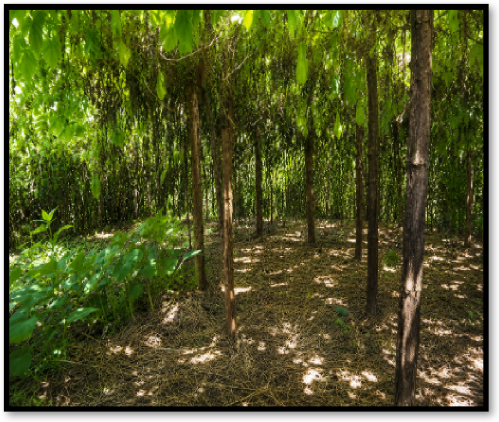
On our own 6.4-hectare farm, we cultivate raw materials using sustainable organic farming practices, transform them into quality processed products, and bring them
to the market. Our farm became more than a production site. It became a living example where farmers could see that value addition was practical and possible.
Our goal was no longer simply:
“How can farmers grow more?”
It became:
“How can farmers earn more, waste less, and retain more of the value they create?”
But there was another part of our innovation that was equally important.
We became a bridge to opportunity.
We help farmers prepare proposals, complete requirements, connect with government agencies, and seek grants, funding, training, and development programs from private institutions and foundations.
We do not simply facilitate applications.
We listen to farmers.
We understand their needs.
We help turn their experiences and aspirations into proposals that can open doors.
And when farmers cannot speak for themselves in the rooms where decisions are made, we become their voice.
Because every farmer deserves not only a fair price for a harvest, but also a fair chance to build a better future.
IMPLEMENTATION: FROM A DREAM INTO SOMETHING PEOPLE COULD SEE
A good idea means little if it remains on paper.
Turning our vision into reality required more than passion. It required planning, courage, hard work, collaboration, and a willingness to begin even when we did not have everything we needed.
We started from literally zero.
We chose not to wait for change.
We began building it.
First, we began with what we had—our own farmland and our determination to make a difference. Through our persistence in seeking opportunities and building partnerships, we were able to access grants that provided agricultural equipment, machinery, and processing facilities. These were more than machines; they became tools of opportunity, helping us turn farmers’ harvests into value-added products, reduce waste, and create new possibilities for our community.
We wanted to lead by example.
Before asking other farmers to believe in our model, we wanted to prove that it could work ourselves.
We developed a complete farm-to-market value chain:
Grow.
Process.
Add value.
Market.
Connect with consumers.
We cultivated raw materials through sustainable organic practices.
We processed agricultural products.
We developed value-added products.
We brought those products to consumers.
And we documented what we learned so that other farmers and communities could adapt the model to their own needs.
But we did not do it alone. Our community members became the foundation of the work. Their dedication and belief in the shared vision made the model possible.
We also built partnerships with government agencies, private-sector organizations, NGOs, and foundations. These partnerships opened access to technical assistance, funding opportunities, capacity-building programs, and market linkages.
This taught us an important truth:
Sustainable transformation cannot be built by one person alone.
It requires people who are willing to believe in one another.
It requires collaboration.
It requires shared responsibility.
And it requires a community willing to move in the same direction.
RESULTS AND IMPACT: WHEN FARMERS BEGAN TO SEE POSSIBILITY
The impact of our work cannot be measured only in hectares, products, or awards.
It is measured in people.
Through Pestales Community, we have provided holistic support to the families we serve.
Community members have received support for housing, clean water, electricity, and food.
Families with children attending school have received fuel assistance to help reduce transportation costs and support their children’s education.
Families have also been given opportunities for backyard gardening, providing nutritious food while creating an additional source of household income.
We also helped community members become entrepreneurs.
They were trained to develop and innovate their own value-added products, transforming raw agricultural produce into marketable goods with greater value.
We then helped market and sell these products, giving small producers access to broader markets.
But our reach did not stop with our own community.
We have gone beyond our boundaries to serve farmers from neighboring communities, creating opportunities and connecting them to markets.
We provided free technical assistance, capacity-building training, proposal development, and guidance in accessing government programs, grants, and support services. We also connected farmers with agencies and partner organizations that could provide resources, funding opportunities, and technical expertise.
Our organization was recognized as a Gawad Saka Awardee by the Department of Agriculture Regional Field Office VII in 2022.
Our achievements in organic agriculture have also continued to grow.
But when people ask me what our greatest achievement is, I do not think first about awards.
I think about the farmer who can now see a future.
I think about the family that can provide food for its children.
I think about the young person who can stay in school.
I think about the farmer who finally gains access to a government program.
I think about the producer who learns to turn surplus crops into a product instead of waste.
And I think about the person who once felt powerless but can now say:
“I have a voice.”
That is the impact we want.
Because when farmers gain knowledge, they gain confidence.
When they gain resources, they gain opportunity.
When they gain market access, they gain greater control over their livelihoods.
And when they become stronger, their families and communities become stronger with them.
The result is not simply higher income.
It is dignity, resilience, self-reliance, and hope.
And our sustainable approach creates environmental benefits as well—reducing post-harvest losses and food waste while promoting responsible organic production.
We are not simply trying to produce more food.
We are trying to build a system that can feed people, sustain farmers, and protect the future.
LESSONS LEARNED: LEADERSHIP IS SERVICE
This journey has taught me many lessons.
But the greatest is this:
True leadership begins with service.
To be a leader, you have to be a servant.
You have to walk your talk.
You have to lead by example.
You cannot ask people to do something you are unwilling to do yourself.
Leadership is not about standing in front of people and giving directions.
It is about walking beside them.
It is about listening.
It is about understanding their struggles.
It is about doing the work.
And it is about remaining present when the journey becomes difficult.
I also learned that meaningful change cannot happen alone.
Our partnerships with government agencies, organizations, foundations, and communities have shown me the power of collaboration.
When people bring their knowledge, resources, and strengths together, possibilities become much greater.
I also learned the importance of balance.
A leader cannot pour endlessly into a community without also learning how to care for herself. Sustainable leadership means caring for the people, the mission, the environment, and oneself.
Above all, I learned that our greatest innovation is not necessarily a machine, a technology, or a business model.
It is our willingness to serve with unconditional love, compassion, purpose, and mission.
We do not serve because we expect something in return.
Our greatest reward is seeing farmers earn a fair income, provide for their families, educate their children, and regain hope.
A MESSAGE TO YOUNG FARMERS
To the young farmers of today, my message is simple:
Do not be afraid of agriculture.
Many young people hesitate to enter farming because they believe there is no future in it.
Some do not want to get their hands dirty.
Some believe farming cannot provide a good income.
But I have learned that agriculture can be much more than a livelihood.
It is the foundation of food security.
It is entrepreneurship.
It is innovation.
It is environmental stewardship.
And it is one of the world’s most essential professions.
We started with nothing—literally from zero.
But through determination, hard work, collaboration, and a shared vision, we grew into a medium-sized cooperative in ten years.
That is why I tell young farmers:
Learn. Innovate. Collaborate. Dream. And do not be afraid to start small.
A seed is small.
But no one looks at a seed and says it has no future.
They see what it can become.
Farmers should see themselves the same way.
A MESSAGE TO WOMEN: NEVER UNDERESTIMATE YOUR POWER TO LEAD
To all women, I say:
Never underestimate your ability to create change.
We have strength.
We have resilience.
We have compassion.
And these are not weaknesses.
They are powerful forms of leadership.
A woman can nurture a family and nurture a community.
She can care for the land and care for the people who depend on it.
She can lead with compassion without sacrificing courage.
She can serve without becoming invisible.
And she can build something that lasts beyond herself.
My journey has taught me that leadership does not require waiting for permission.
Sometimes, you simply have to see a problem and have the courage to say:
“Something must change—and I will help make it happen.”
THE HARVEST OF HOPE
Our story began with a visit to Dalaguete.
It began with farmers working under the sun.
It began with vegetables whose value was determined by people far removed from the labor that produced them.
And it began with a piece of chayote worth only 50 centavos.
But that 50-centavo chayote was never really about the vegetable.
It was about the farmer behind it.
It was about the family depending on it.
It was about the dignity of work.
It was about the painful distance between those who feed communities and those who benefit from the food system.
That small price became a question.
The question became a mission.
The mission became a cooperative.
The cooperative became a movement.
And the movement became a source of hope for thousands of farmers.
Today, the fields of Pestales grow more than crops.
They grow confidence.
They grow opportunity.
They grow leadership.
They grow dignity.
They grow hope.
Because the greatest harvest is not measured in kilograms.
It is measured in the farmer who stands a little taller.
The child who stays in school.
The family that becomes more secure.
The farmer who gains access to an opportunity once thought impossible.
The young person who chooses agriculture.
And the woman who realizes that her voice can change a community.
The chayote was worth 50 centavos.
But its true value was never measured by its price.
It became the seed of a movement.
And that movement continues to grow.
From nothing to something.
From injustice to opportunity.
From one woman’s concern to thousands of farmers empowered.
From a seed in the soil to a vision for a better future.
This is not simply the story of a farm.
It is the story of a woman who chose to listen when others looked away.
A woman who chose to serve when she could have simply observed.
A woman who chose to build when it would have been easier to complain.
And a woman who discovered that when you plant with purpose, you harvest more than food.
You harvest dignity.
You harvest opportunity.
You harvest hope.
And sometimes, even from nothing, you can build something powerful enough to change lives.
Comments are closed