
What does it take to connect small-scale farmers with public schools, government food programs, and other institutional buyers?
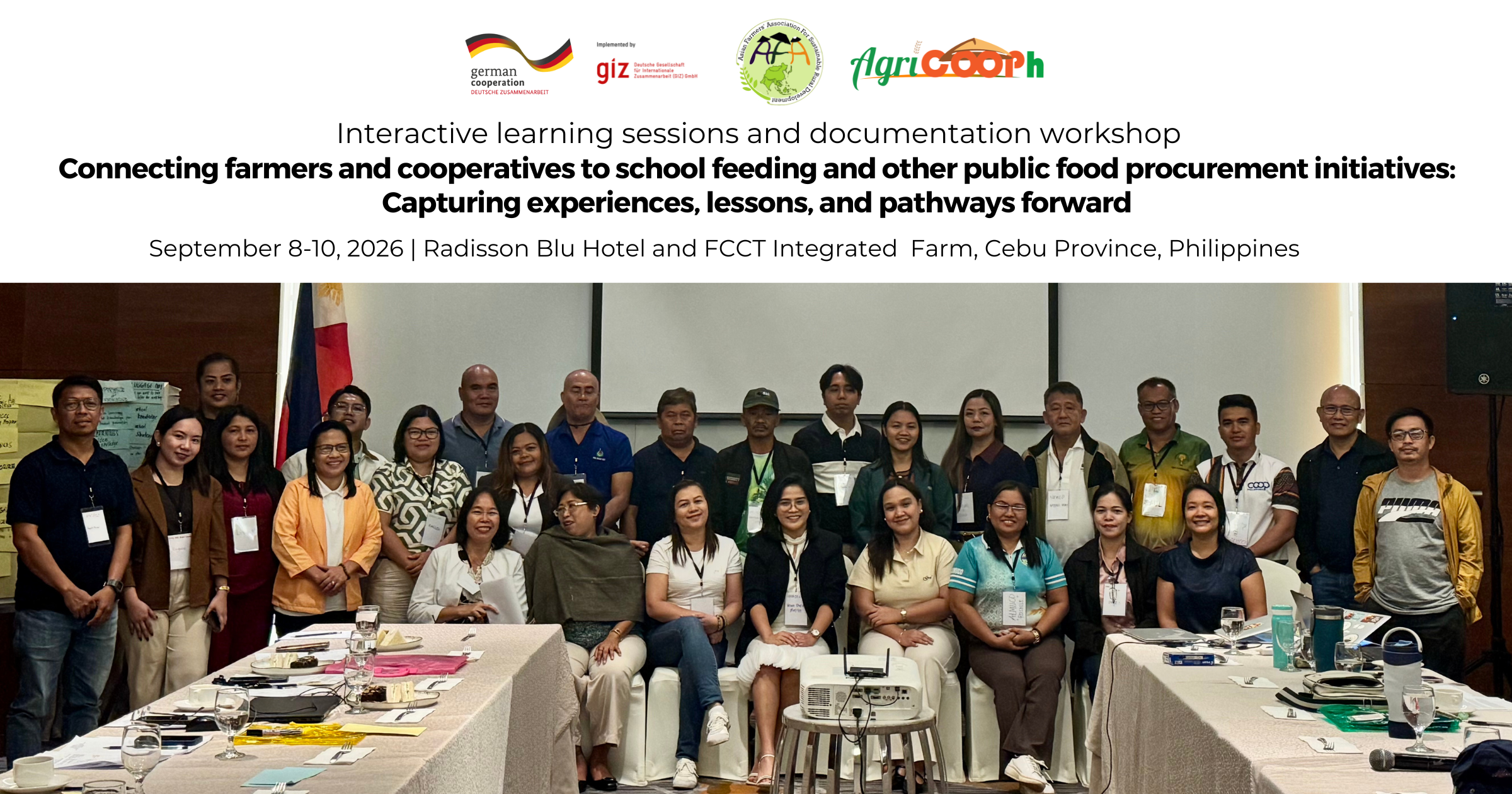
Today is Day 1 of the Learning and Documentation Workshop on School Feeding and Institutional Food Procurement. Participants from 12 agri-cooperatives began exploring this question by sharing their experiences, challenges, innovations, and lessons from engaging with school feeding programs, complementary feeding, food stamps, First 1,000 Days, and other institutional markets.
For cooperatives, supplying public institutions involves much more than producing food. It requires organizing and clustering farmers, planning production, meeting food safety and quality requirements, aggregating products, managing logistics, securing financing, and building reliable relationships with public institutions.
The three-day learning and documentation workshop, taking place on September 8–10, 2026, brings together cooperatives with practical experience in supplying schools and other institutional buyers. On Day 1, participants began sharing their experiences, looking at what has worked, what has been challenging, and what other cooperatives can learn from their journeys.
Among the cooperatives sharing their experiences are Baclay MPC, Al-Rahman Farmers MPC, Salvacion Farmers Development Cooperative, ALMUCO, MAGSIGE MPC, SOEMCO, Don Bosco MPC, Blessed One Multipurpose Cooperative, Cagayan Seed Producers MPC, Naujan MPC (NAMCO), and Cuta Farmers MPC.
The workshop comes at a time when public food procurement is opening opportunities to connect local farmers with public institutions and public food programs. In the Philippines, the Sagip Saka Act (RA 11321) provides important pathways for agricultural cooperatives to participate in public food markets.
Yet, as the experiences shared today demonstrate, opportunities on paper do not automatically translate into markets for farmers. Cooperatives need the capacities, systems, partnerships, financing, and market relationships to turn these opportunities into sustained engagement. The learning will continue over the next two days, including field exchanges featuring the FCCT model in Tuburan and Lamac MPC’s experience in clustering and marketing.
Organized as part of the Asia FO Hub project by GIZ, AFA, and AgriCOOPh, with support from BMZ, the workshop uses peer learning, experience sharing, and guided reflection to turn cooperative experiences into practical knowledge that can be shared with others.
The lessons gathered throughout the workshop will contribute to a policy brief, a handbook for agri-cooperatives, a map of opportunities and constraints, and recommendations for improving cooperative participation in institutional procurement.
The learning will also inform the establishment of 12 Cooperative Innovation Hubs throughout the Philippines in the coming months.
The learning continues.
Comments are closed