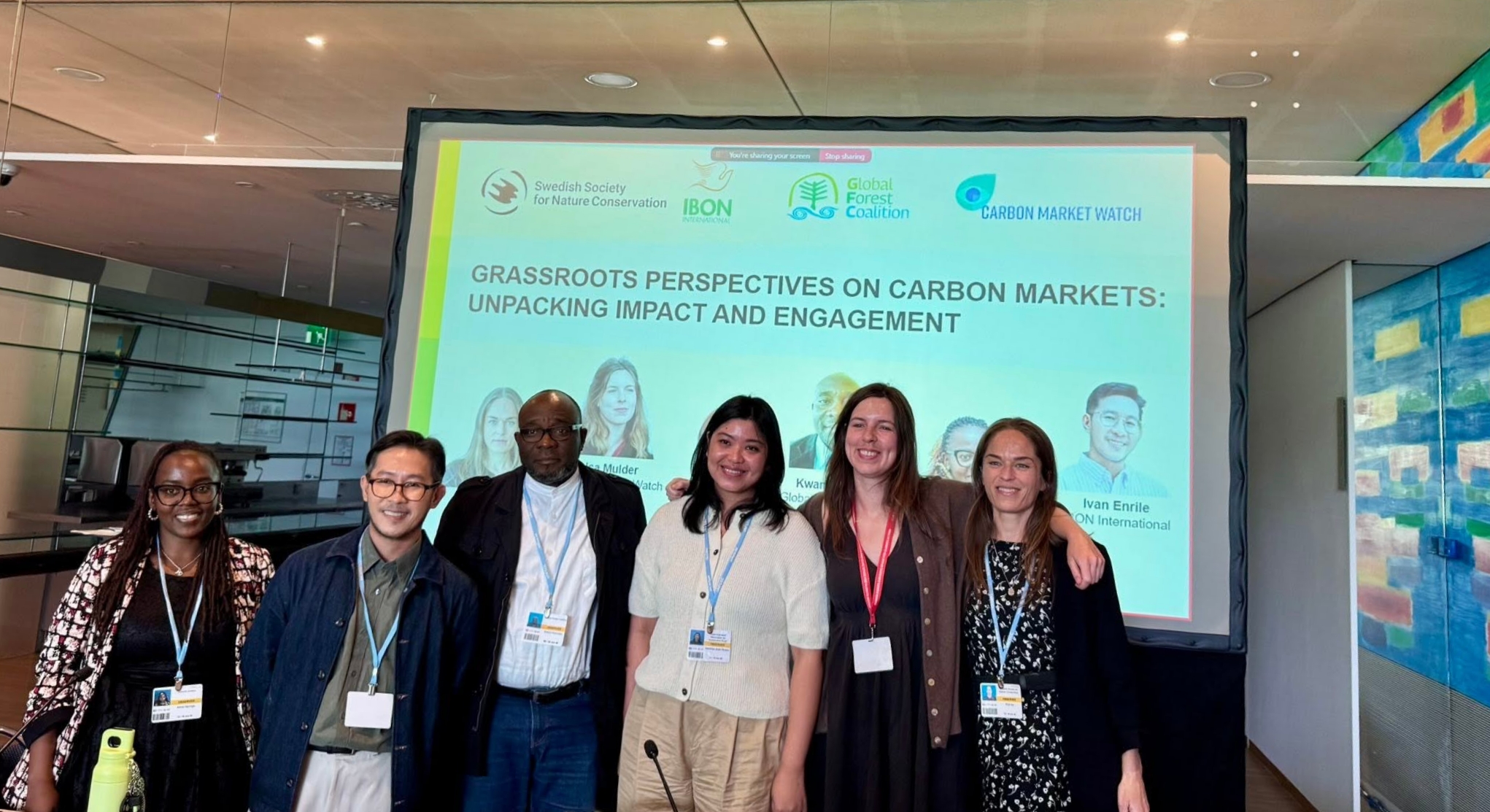
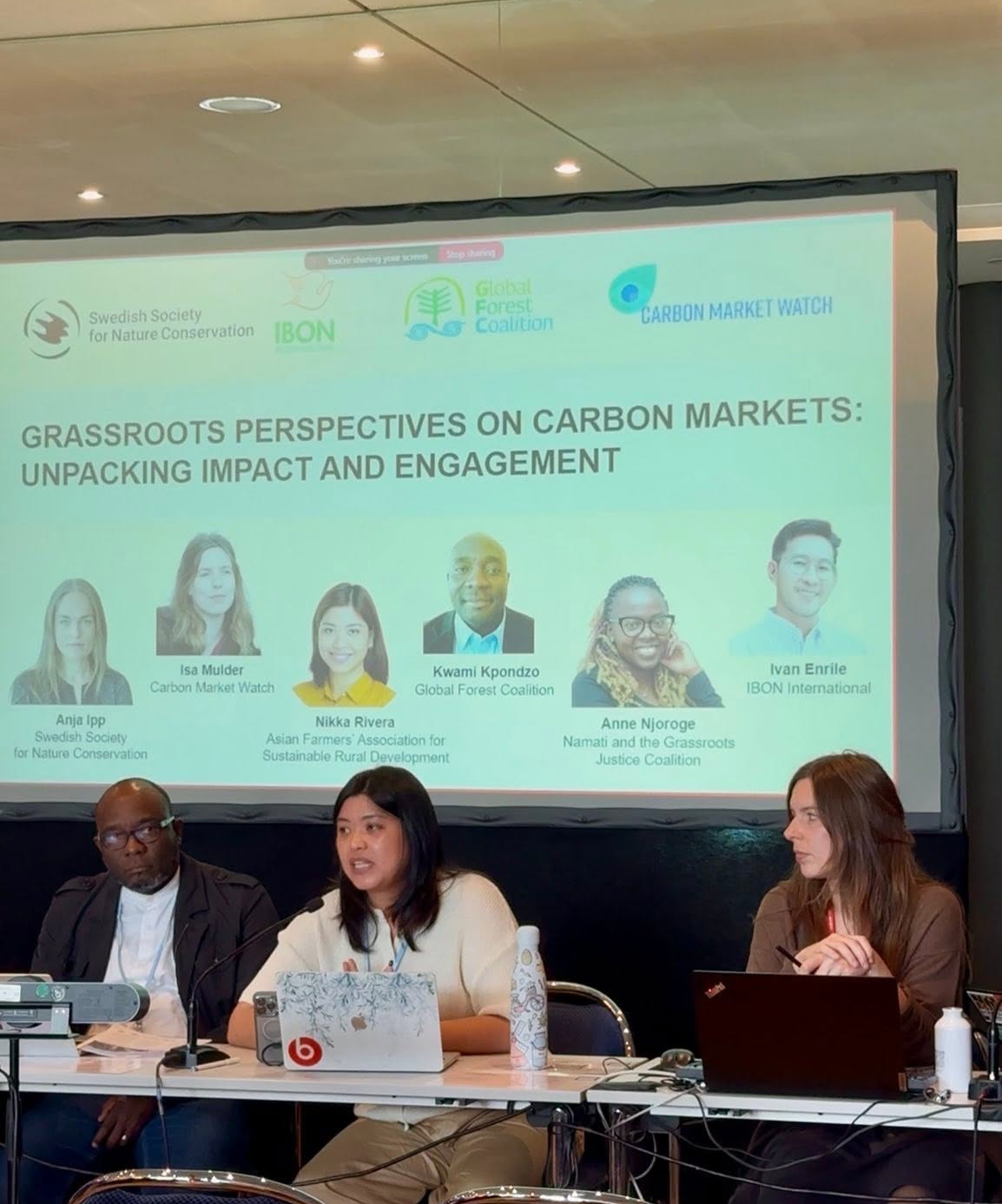
The Asian Farmers’ Association for Sustainable Rural Development (AFA), represented by Nikka Rivera, participated in the UNFCCC SB64 side event, “Grassroots Perspectives on Carbon Markets: Unpacking Impact and Engagement,” where she shared insights from AFA’s recent engagement with Aeta Indigenous communities in Botolan, Zambales, Philippines.
The Asian Farmers’ Association for Sustainable Rural Development (AFA), represented by Nikka Rivera, participated in the UNFCCC SB64 side event, “Grassroots Perspectives on Carbon Markets: Unpacking Impact and Engagement,” where she shared insights from AFA’s recent engagement with Aeta Indigenous communities in Botolan, Zambales, Philippines.
The discussion centered on the proposed Alba Wind Farm project under the Paris Agreement Crediting Mechanism and highlighted important lessons on community participation, Indigenous Peoples’ rights, and the implementation of carbon market initiatives.
Drawing from AFA’s field engagement, Rivera emphasized several concerns raised by the Aeta communities, including the quality and accessibility of information provided during the Free, Prior and Informed Consent (FPIC) process, the recognition of customary and informal land tenure rights, and the need for effective grievance mechanisms and accountability when communities experience harm.
A key message from the discussion was that consultation alone does not constitute Free, Prior and Informed Consent. Meaningful participation requires more than conducting consultation meetings, it demands that communities are provided with complete, understandable, and timely information, and are able to make decisions freely through processes that respect their own governance systems and customary practices.
The side event also underscored the need to rethink how carbon market and climate-related projects are designed and implemented. Rather than viewing local and Indigenous communities as stakeholders to be consulted after project plans have already been developed, project proponents should recognize that they are entering territories with existing rights, governance systems, knowledge, and development priorities.
Communities are rights holders whose perspectives and decision-making processes must be respected from the earliest stages of project design and throughout implementation, monitoring, and beyond. Ensuring genuine participation and accountability is essential for building climate initiatives that are not only environmentally effective but also socially just and rights-based.
Through its participation in the UNFCCC SB64 discussions, AFA reaffirmed its commitment to amplifying the voices of small-scale farmers and Indigenous Peoples in global climate policy processes, advocating for approaches that place community rights, equity, and meaningful participation at the center of climate action.