The organic rice market in Indonesia is predicted to continue to grow by 22% per year, worth IDR 28 billion (USD 1,589,789). This shows that next year it is certain that the organic food business will continue to move in a positive direction (Anonymous, 2014). This organic farming system was welcomed quite enthusiastically, both by the general public as consumers and by farmers as actors on the production side. With the potential of organic farming, especially organic rice, many farmers are starting to switch from inorganic farming systems to organic farming systems, one of which is farmers in Boyolali Regency.
The sustainability of organic farming considers various ecological, economic, and social aspects. The development of organic farming, especially organic rice in Boyolali Regency, Central Java province, Indonesia, is quite rapid. This can be seen from the growing number of farmer groups and the area of organic rice harvest for the last ten years. Tresno Tani, APPOLI Producer Cooperative, or popularly called APPOLI, works in Boyolali Regency and Semarang Regency, Central Java. Specifically in Boyolali Regency, the cooperative operates in Simo, Nogosari, Sambi, Andong, and Teras sub-districts. At the same time, they work in the Kaliwunggu sub-district, Semarang Regency.
The producer cooperative has been established since 2015, initiated by a local producer, facilitated by the Aliansi Petani Indonesia (API). The number of smallholders organized by APPOLI is 1,224 farmer households. Their flagship products or commodities are various organic rice and organic secondary crops. Consolidated land reaches 350 hectares, of which 277 hectares are identified as wetlands, and 73 hectares are dryland.
Currently, as flagship products are organic rice and secondary crops, Tresno Tani APPOLI Cooperative harbors 686 smallholder producers/members. They have an organic certification from the Indonesia National Standardising (SNI) for 135 hectares involving 335 smallholder producers. Meanwhile, the rest is still being standardized by the Internal Control System (ICS).
| The key factors that influence the sustainability of organic rice farming in Boyolali Regency are the ecological aspect, where natural carrying capacity and natural sustainability are the keys to success in organic farming. Meanwhile, for the economic aspect, it is the elimination of dependence on external chemical input/resources, so that the production costs are relatively lower and the products produced have better added value compared to non-organic farming. In addition, the lack of knowledge of organic farming among farmers makes them increasingly dependent on external input/resource. The social and environmental aspects of the development of organic rice farming are also influenced by a supportive policy and market environment or consumer awareness, considering that the price for organic rice is perceived as expensive and exclusive to certain groups. |
Main Service
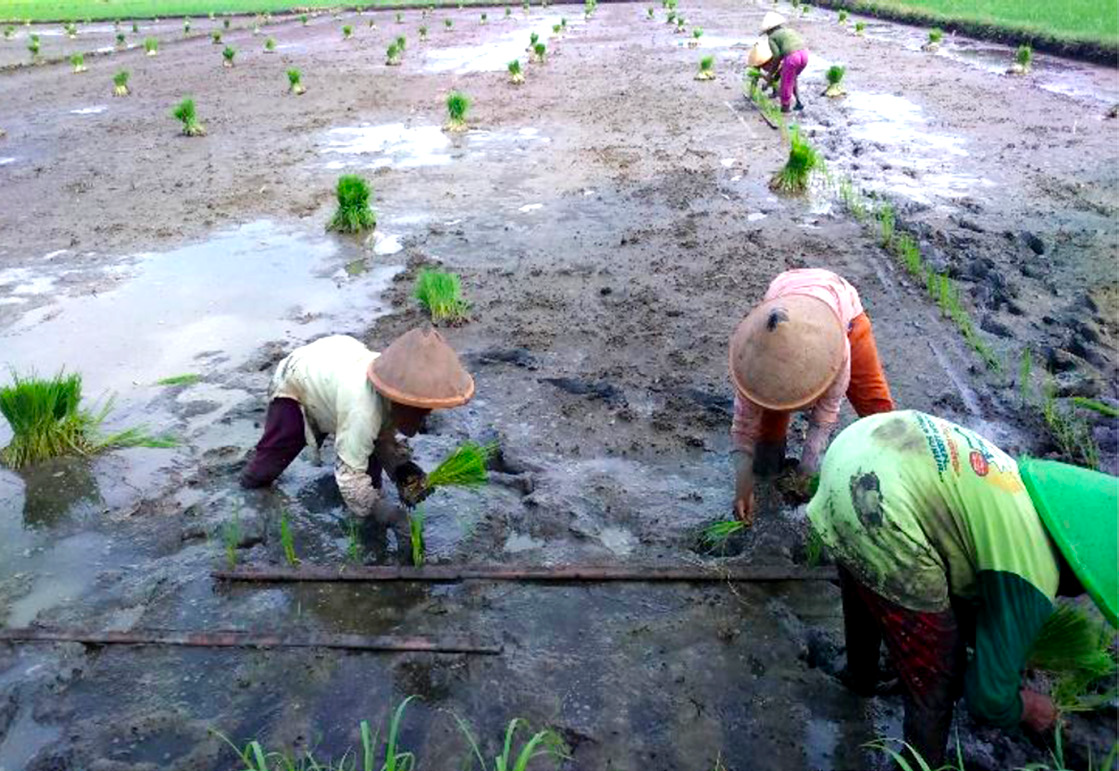
Main services provided by Tresno Tani APPOLI Cooperative to members are (i) development of internal agri-input such as organic fertilizer and pesticide; (ii) field school to develop organic farming system; (ii) internal control system and organic certification; (iii) absorb and purchase products from members, conduct post-harvest handling and collective marketing; (iv) partnership and policy advocacy.
Mission of those mains services are as follows: (i) developing farmer organizations that have a bargaining position to develop organic rice and secondary crops in Boyolali district, (ii) implement a farming pattern with an organic system; (iii) growing productive economic groups based on organic agriculture; (iv) strengthen the capacity and role of women and young farmers both in organizations and in the value chain; (v) develop certification-based collective marketing, education, training and community service based on organic farming.
The Aliansi Petani Indonesia (API) or Indonesian Peasants’ Alliance, through the APFP-FO4A, provided support in the form of a Challenge Fund to be used as investment and working capital to grow an organic business ecosystem and reach cooperative business maturity. In addition, API, the National Implementing Agency (NIA) of the APFP-FO4A in Indonesia, provided capacity building, technical assistance, and business incubation for APPOLI, including strengthening policy advocacy through lobbying, policy dialogues, and multi-stakeholder consultations.
The Asia-Pacific Farmers’ Program (APFP) – Farmers’ Organizations for Asia (FO4A) is implemented by the Asian Farmers’ Association for Sustainable Rural Development (AFA) and La Via Campesina (LVC), with funding from the European Union (EU) and the International Fund for Agricultural Development (IFAD). The program aims to strengthen the capacities of farmers’ organizations to provide economic services, advocate for enabling policies, and promote sustainable livelihoods for small-scale family farmers across Asia.
Implementation of the Business Incubation
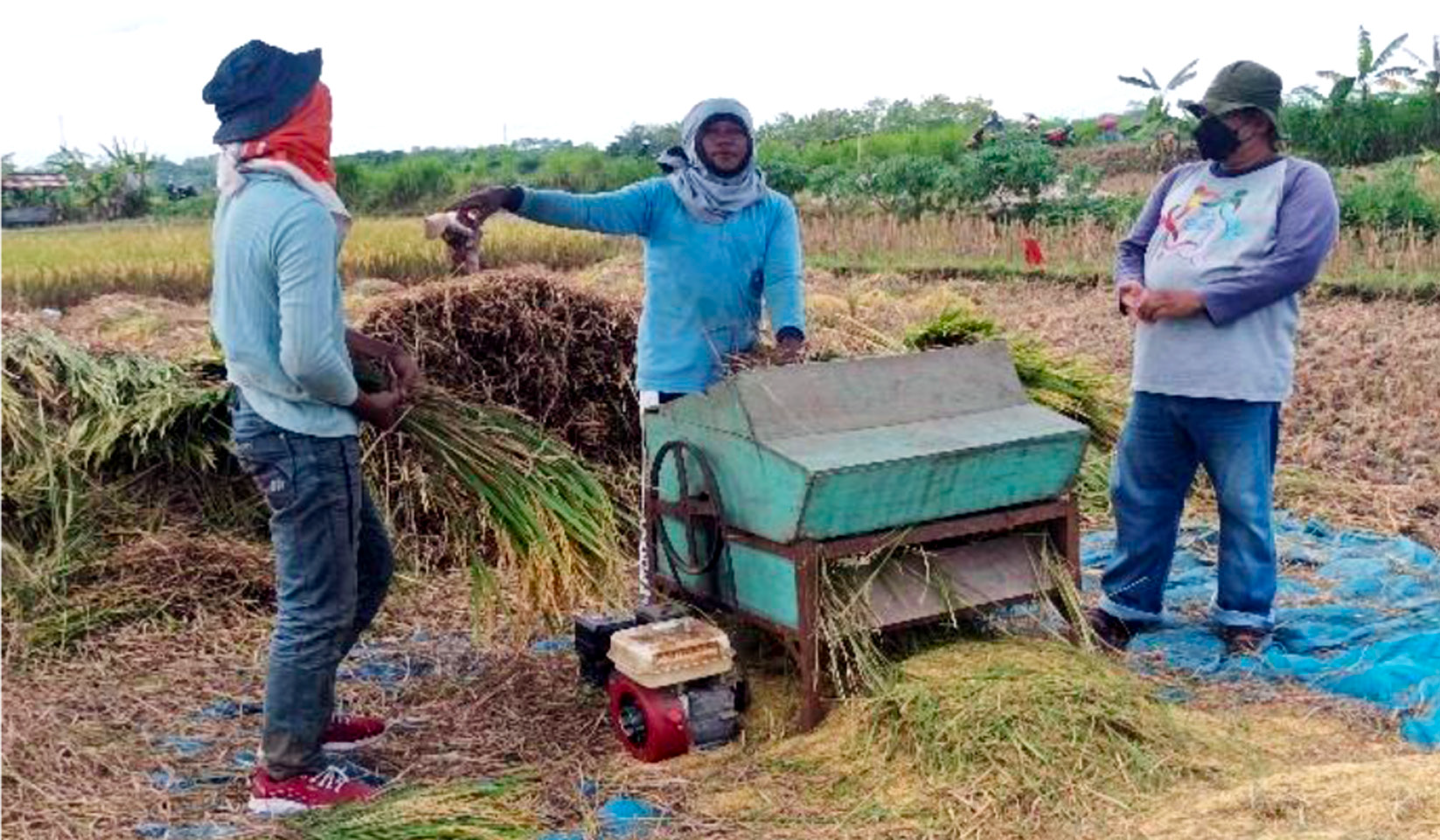
The program of business incubation is being implemented in Boyolali Regency and Semarang Regency, Central Java province. The target group is 685 farmers who are members of the Tresno Tani APPOLI Cooperative. Capacity building, technical assistance, and business incubation have been provided by FOs, NFOs, and NIA to APPOLI and its members. The services resulted in several outputs including: improving farmers’ skills in cultivation based on SNI 6729 in 2016, improving the skills of the ICS Team in assisting farmers, improving post-harvest skills of processing workers, increasing skill of cooperative staff to formulate business plan, improving the institutional capacity of cooperatives and human resource knowledge/skills in providing fast financial reports for various interests and stock management, improving capacity and skill of management and finance staff regarding the financial recording, organic certification, improving the skills of young farmers in organic farming, creating a systematic product tracking system, training for young farmers and ICS staff to implement ICS, identify market opportunity and market exploration with consumers, farmer compliance assessment and preparation for organic certification, capacity building regarding product branding and marketing methods, improving skills of members in cultivation complied to SNI standard.
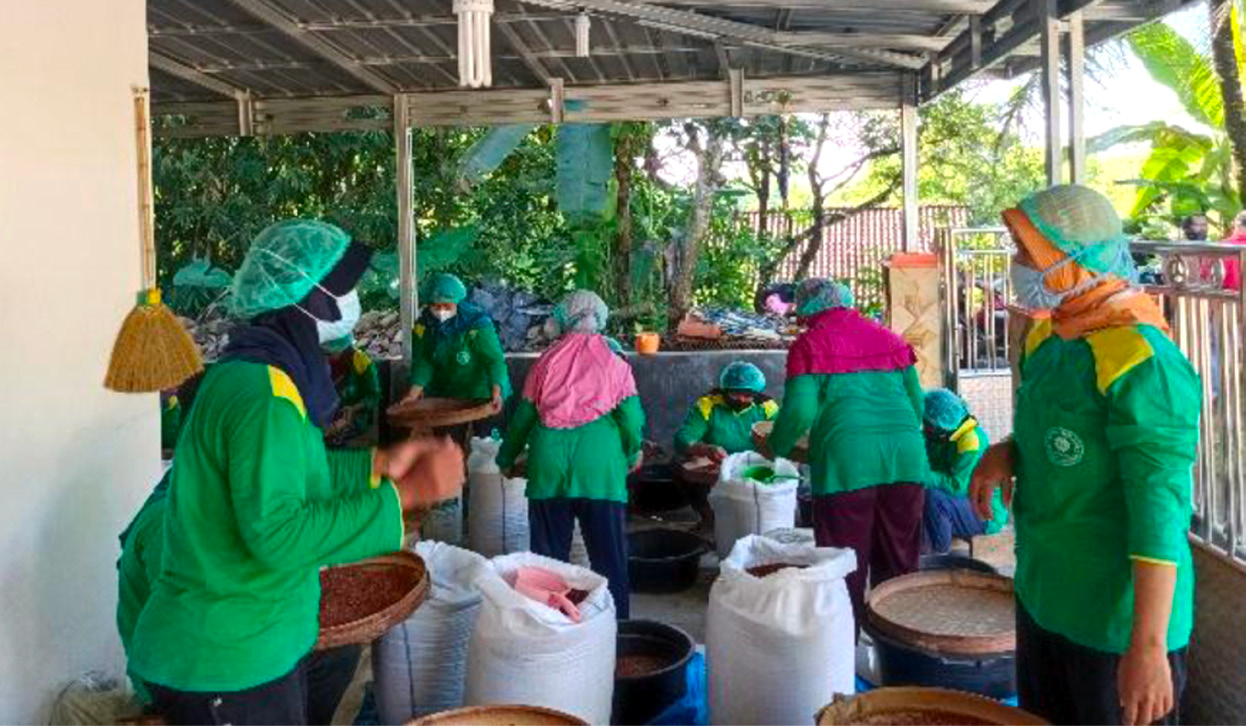
Part of the cooperative’s business services is purchasing, processing and marketing the flagship commodities produced by Tresno Tani APPOLI Cooperative members, especially the commodity that has been certified. The business activities operated by Tresno Tani APPOLI since August 2024 to August 2025 were purchasing raw material from member of “rice grain, secondary crop”, processing them, and marketing the products.
| Equity, Liability Mobilization, and Marketing Tresno Tani APPOLI Cooperative holds a core business to improve the value chain for organic rice and secondary crops based on membership, where they provide the consumers with organic products. The preference of the products is “Health, Welfare, Sustainability, and Regeneration”. As with cooperatives in general and government regulations, the equity resources of cooperative obtained from primary saving, mandatory saving, and grants. During August 2024 to August 2025, Tresno Tani APPOLI can mobilize equity and liability, which is a total of IDR 2.173.108.700 (USD 144.874). Utilization of available capital of Tresno Tani APPOLI Cooperative is to fund production cost, including: (i) purchasing raw material “rice and secondary crop”; (ii) processing expense; (iii) employees’ expense; (iv) transportation expense. At the same time, it is also to fund operational cost or overhead cost, including: (i) stationery; (ii) salary for manager and staff; (iii) promotion; (iv) training; (v) Internal Control system ICS). From August 2024 to August 2025, APPOLI achieved its product sales with a turnover of IDR 2.228.420.800 (USD 148.561,39). During that period, the cooperative has been servicing 16 main consumers. |
Impact and Learning
The improvement of the economic ecosystem in rural areas will contribute to increasing income and improving sources of livelihood for small farmers, food and nutrition security, and family farming safety. In this case, an agricultural cooperative led by farmers’ organizations (FOs) can become an important actor to play a role in the development of the economic ecosystem in rural areas. The case was initiated by Tresno Tani APPOLI Cooperative.
Under the APFP-FO4A, they have been strengthened by capacity building, technical assistance, business incubation, and availability of the support fund from the Challenge Fund, and as a result, the Tresno Tani APPOLI cooperative increased the income for smallholder farmers, contributed to improving sources of livelihood for rural people, food and nutrition security, and family farming safety in rural areas in Boyolali District. It is indicated that improved income of 685 smallholder farmers, of 15% of total raw material purchasing, amounted to IDR 286.286.550, providing employment for women and youth, that existing 15 employees.
With various capacity building services, such as training, field school, technical assistance, and business incubation provided by FOs, NFOs and NIA to APPOLI have been increasing the knowledge and skill both members or staff of APPOLI. At the same time, participation of farmer in cooperative and certification process can be improved. It showed in 685 farmers who participate and joint in the cooperative and implementing the organic farming.
The Tresno Tani APPOLI Cooperative has become a learning centre for farmers and young students to improve their knowledge and skills in organic rice and secondary crops cultivation. As a commitment to implement sustainable, low-carbon agriculture, Treno Tani APPOLI has applied for organic certification. Of the 350 hectares of consolidated land, 135 hectares of land have been certified by SNI (Indonesian National Standard), while the rest apply the Internal Control System (ICS).
The implementation of organic farming, as well as maintaining the natural sustainability of agricultural resources, has also supported environmental sustainability and the sustainability of livelihoods for hundreds of organic rice and secondary crop farmers in Boyolali and Semarang Regencies. While at the same time, organic farming supports low-carbon agriculture that contributes to CO2 reduction as well as contributes to better living space for human, animal, and plant health, thus preserving and sustaining life.