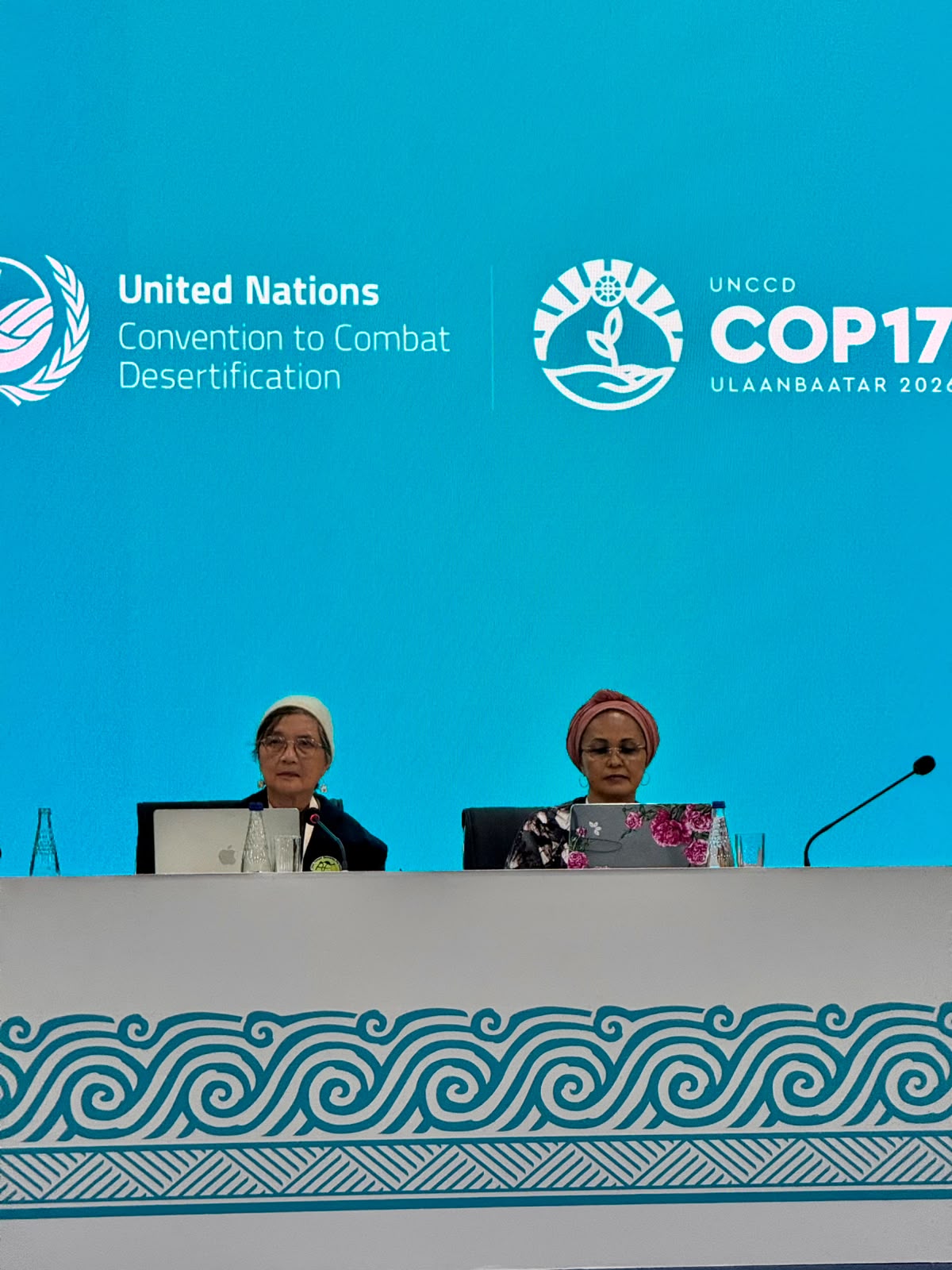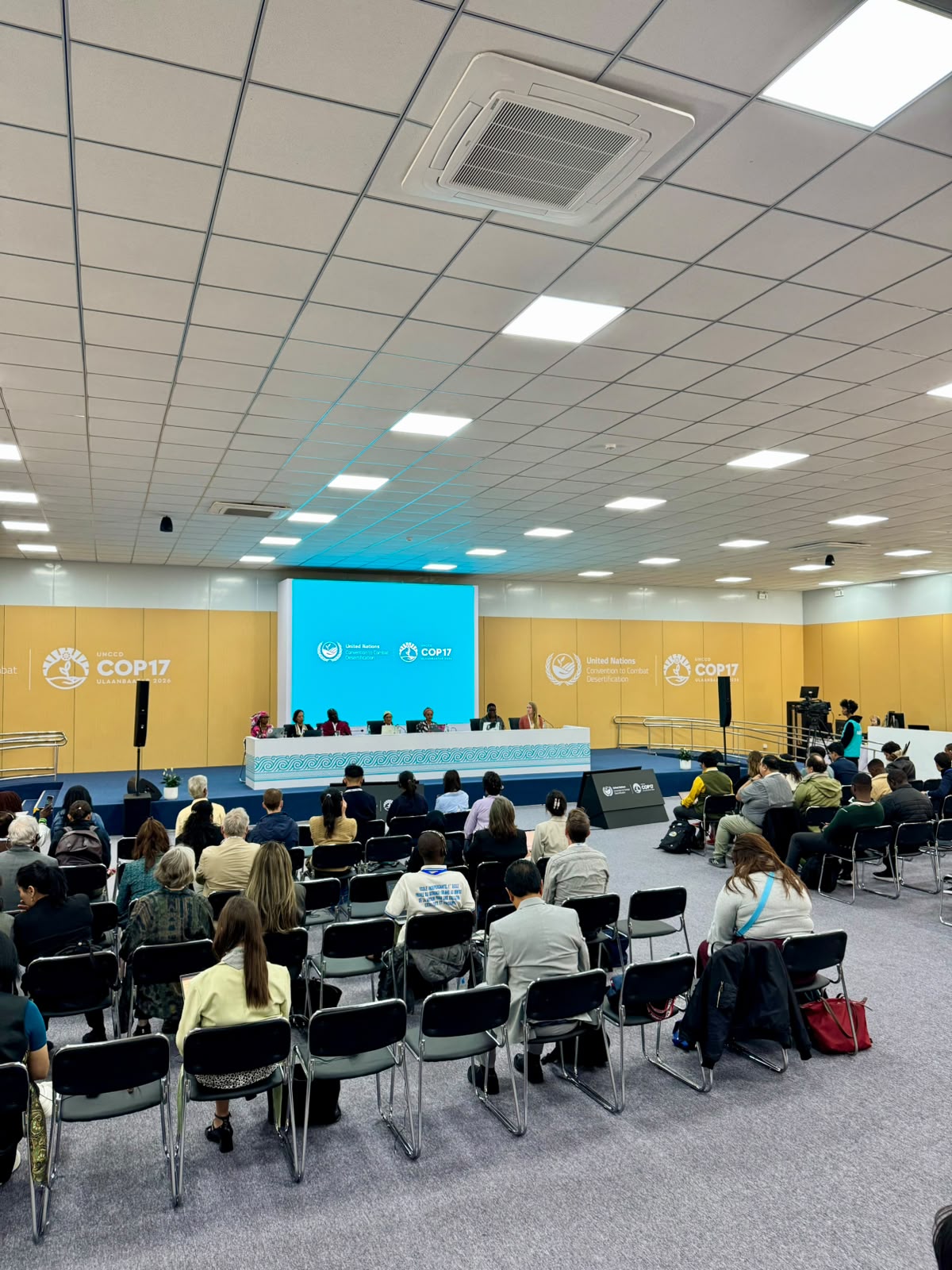
ULAANBAATAR, MONGOLIA — As governments and stakeholders gather for the 17th session of the Conference of the Parties to the United Nations Convention to Combat Desertification (UNCCD COP17), communities on the frontlines of land degradation, drought and climate change are calling for a stronger voice in decisions that directly affect their lives and livelihoods.
Representing the Local Communities Caucus, Asian Farmers’ Association for Sustainable Rural Development (AFA) Secretary General Esther Penunia highlighted the urgent realities faced by peasant and small-scale family farmers, pastoralists, small-scale fishers, forest-dependent communities, Afro-descendant communities and others whose livelihoods depend directly on land, water, forests and other natural resources.
For these communities, the impacts of environmental degradation and climate change are no longer distant threats. They are already experiencing failing crops, water shortages, declining yields and incomes, and growing threats to livelihoods and food security.
Yet local communities are not only among those most affected. They are also among those already taking action.
Communities are already providing solutions
Across rural communities, farmers, pastoralists, fishers and other local resource users are implementing solutions that restore ecosystems, strengthen resilience and sustain local food systems.
These include agroecological practices, agroforestry, sustainable fisheries, sustainable livestock production and grazing systems, as well as community-led approaches to managing land, water, forests and biodiversity.
Their knowledge and practices, developed through generations of working closely with local ecosystems, offer important lessons for addressing land degradation, drought and climate change.
“We cannot build a COP of action without the people who are already taking action on the ground.”
The message from the Local Communities Caucus is clear: communities must be recognized not simply as beneficiaries of environmental and climate policies, but as partners and solution providers.
A call for meaningful participation
The Local Communities Caucus is calling for stronger and more institutionalized participation of local communities in the UNCCD process.
Among its key calls are:
- Meaningful participation of local communities in UNCCD decision-making and implementation;
- Recognition of local communities as partners and solution providers;
- Institutionalized mechanisms for community participation in UNCCD committees and bodies;
- Improved access to finance for community-led action;
- Respect for rights to land, water and forests; and
- Recognition and integration of local and traditional knowledge into policies and programs.
For communities whose livelihoods depend directly on natural resources, decisions made at international forums can have profound consequences on the ground. Ensuring their participation is therefore not simply a matter of representation—it is essential to developing policies and solutions that are effective, inclusive and grounded in local realities.
Leaving no one behind
The Local Communities Caucus stands together with Indigenous Peoples, youth, gender constituencies and civil society organizations in calling for meaningful participation throughout the UNCCD process.
Those who experience the impacts of land degradation and drought firsthand must have a meaningful role in shaping the solutions.
A COP focused on action must recognize that much of that action is already happening in communities—on farms, in forests, on grazing lands and along fishing grounds.
The people restoring land, protecting biodiversity, managing natural resources and sustaining local food systems must be at the center of efforts to build a more resilient future.