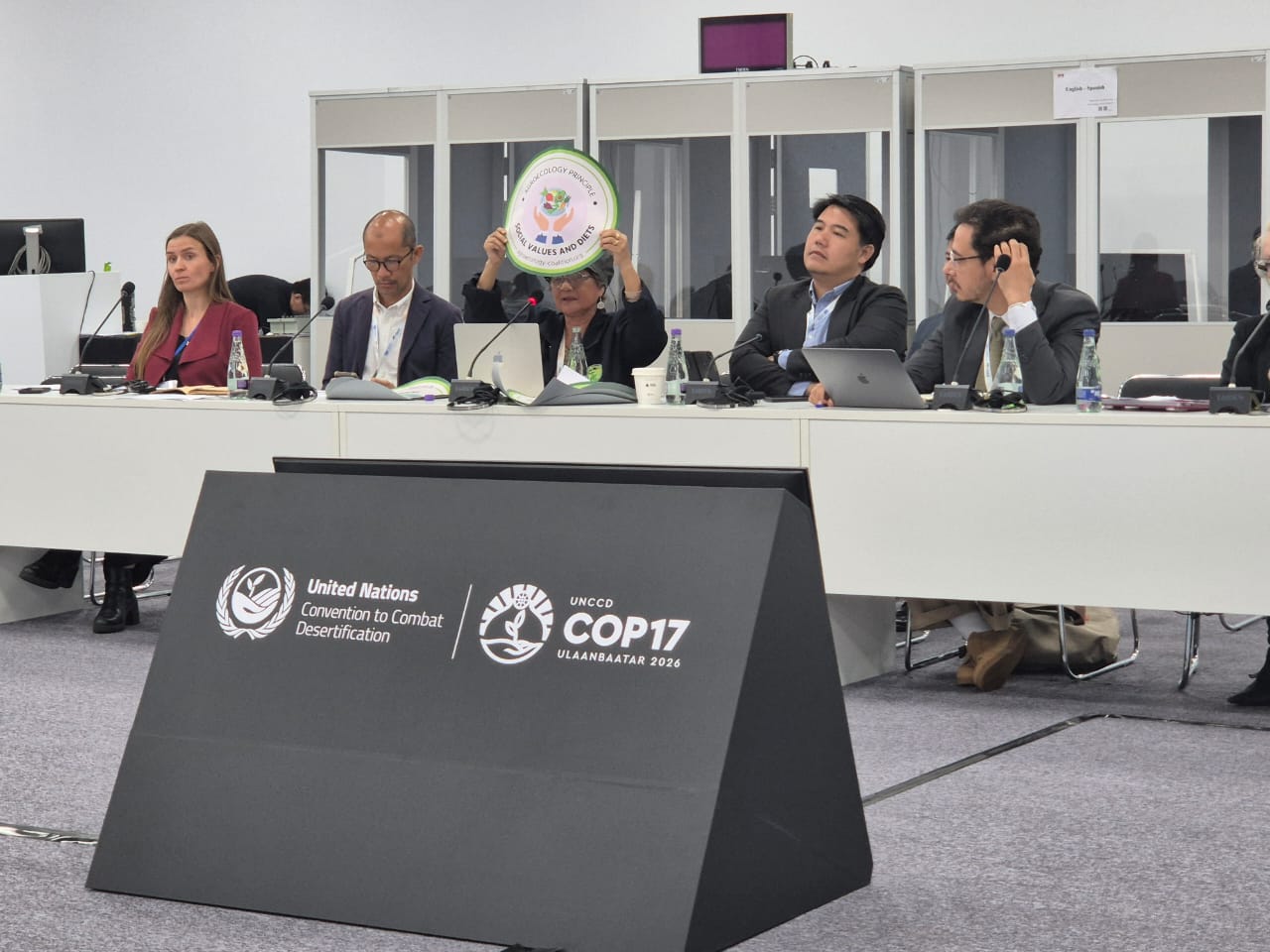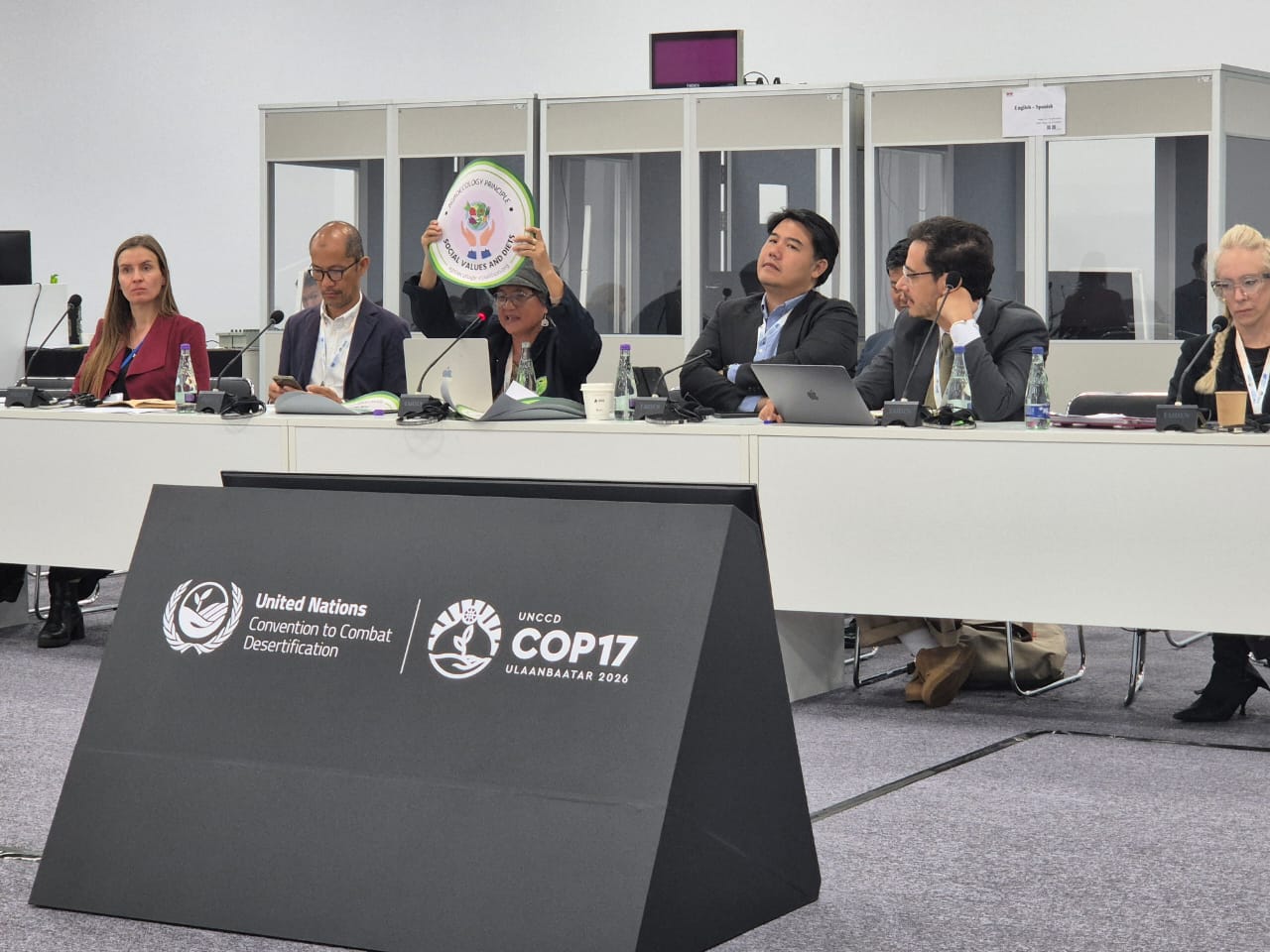
UNCCD COP17 UlaanBaatar 2026
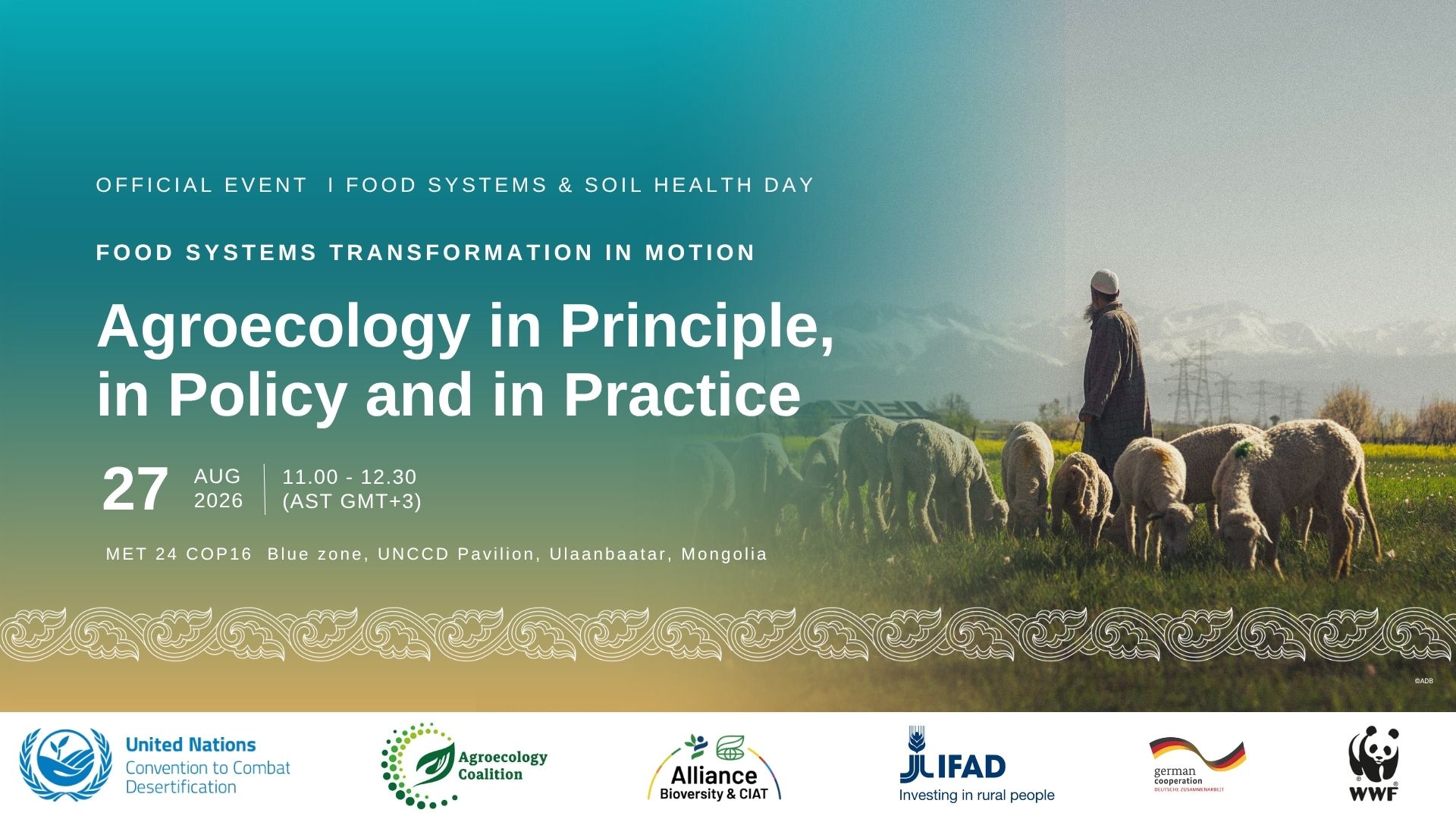
Food Systems and Soil Health Day
Food systems transformation in Motion: Agroecology in principle, in policy and in practice
 : 27 August 2026
 11:00–12:30 (AST GMT+3)
 Room MET24, Blue Zone
Background
Agroecology drives food systems transformation by strengthening local autonomy, reducing external inputs, and building resilience from the ground up. Integrated and holistic, agroecology addresses the entire food system – from production to consumption – and fosters co-benefits that reach economic, environmental, climate, health, social and cultural objectives.
This session will cover the core framework of agroecology as an approach that mimics natural processes while building on local community knowledge, adheres to foundational environmental and social benchmarks, and that is anchored on set of principles and elements.
It will also tackle structural drivers, given the growing political and policy momentum on agroecology from global to regional, to national and sub-national territorial levels, supported both by governments and non-state actors. It will likewise feature on-the-ground action illustrated by examples at the farm level (e.g., multicropping, agroforestry, and use of local seeds and opportunity crops to drastically reduce reliance on chemical inputs) and short value chains (e.g., direct networks between farmers and consumers, returning fair profit margins to smallholders while improving food access).
Finally, it will feature some tools and mechanisms that can be used in capturing agroecological transitions. Agroecology also offers a practical entry point for adaptation finance. By reducing dependency on external inputs, diversifying production systems, restoring soil health, strengthening water retention and building local seed and knowledge systems, agroecological approaches can reduce climate-related risks while improving food security, nutrition and rural livelihoods. However, these transitions require fit-for-purpose finance: grants and concessional resources for early adoption, de-risking tools for smallholders and producer organizations, investment in extension and local markets, and metrics that capture resilience, soil health, livelihood and nutrition outcomes. The session will therefore explore how agroecology can be recognized not only as a set of principles and practices, but also as an investable adaptation pathway for food systems transformation.
Objectives and Expected Outcome
Advance agroecology as a main driver of inclusive, resilient and sustainable food system transformation and as a practical adaptation finance pathway for restoring soils, reducing climate risk and strengthening rural livelihoods.