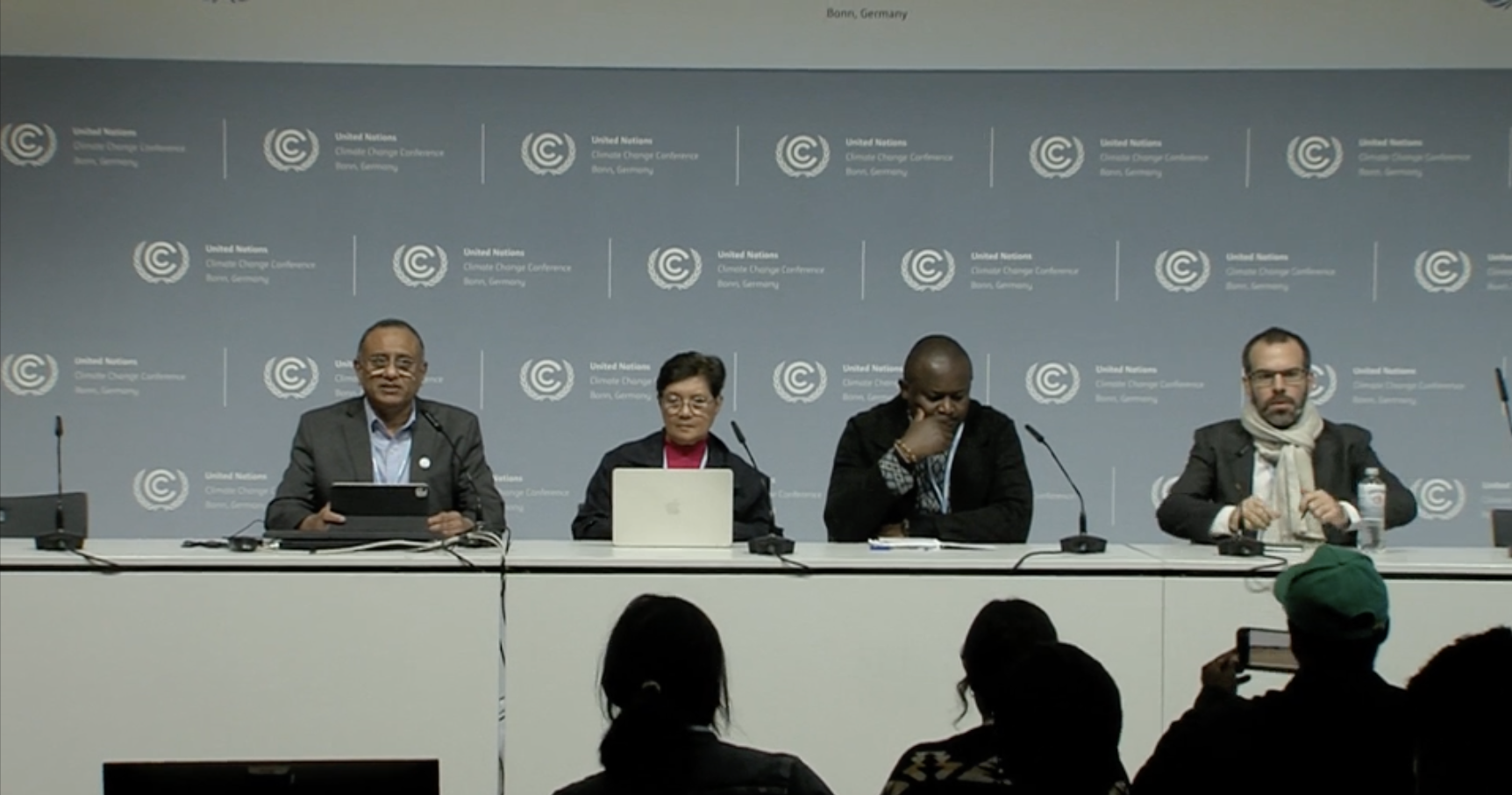
16 June 2026 – Farmers leaders representing 95 million smallholders across Latin America, Africa, Asia, and the Pacific warned that a climate fuelled El Niño combined with the ongoing fuel and fertiliser crisis, risk spiralling food prices and hunger at the UN Climate Talks in Bonn, Germany today.
The farmers also called for the establishment of a ‘Farmers Resiliency and Empowerment Fund’ to ensure more climate finance for agriculture is targeted at smallholders where it will have the most impact. Family farms produce half the world’s food calories, as well as globally important commodities such as cocoa, coffee and rice. They are also pioneering nature friendly approaches – such as agroecology – that help reduce farmers’ dependence on costly chemical fertilisers and boost climate resilience. However despite their critical role smallholders and their organisations get just 0.36% of the funding they need to adapt.
Across South and Southeast Asia, El Niño is expected to lead to extreme heat and drought and stronger typhoons bringing heavy rains and flooding. This will damage crop yields and the marine ecosystems on which fisheries depend – impacting producer incomes and pushing up food prices. The Southeast Asia region could see a 2%–8% reduction in rice output compared with a normal year, with larger local losses in drought-prone areas.
El Niño impacts will be compounded by the ongoing fuel and fertiliser crisis sparked by the US – Israeli war in Iran – with the price of diesel increasing by as much as 50% in the Philippines in 3 months since the start of the war while fertiliser prices have risen by over a third (37%).
Esther Penunia, Secretary General, Asian Farmers Association said:
“El Nino weakens our hopes and postpones our dreams. Across Asia it will bring drought, forest fires, and stronger typhoons. It will damage crops, spread pests and disease and bleach the coral which support our fisheries. The SouthEast Asia region could see a 2%–8% reduction in rice production – our staple crop.”
“Family farmer organisations are key to building resilient farms, fisheries, and forests through nature friendly approaches like agroecology. Yet we can not access the climate finance that is out there – in the Green Climate Fund or governments. We need a farmers resiliency and empowerment fund, led and managed by farmers organisations, to ensure new and existing finance gets where it is most needed and where it can have maximum impact. Trust us to manage the money and we will transform agriculture for the benefit of farmers, workers and consumers across the globe.”
Stephen Muchiri, CEO, East Africa Farmers Federation:
“This – climate fuelled – El Nino is set to be the strongest on record yet family farmers who produce over half the world’s food are unable to access the finance they need to adapt. A Farmers’ Resiliency Fund – led and managed by farmer organisations – would ensure existing and new finance is targeted where it is most needed. It will maximise the impact of every adaptation dollar and help keep food prices down for the benefit of farmers, workers and consumers across the globe.”
Thomas Patriota, Head of International Affairs, Ministry of Development and Family Farming, Brazil:
“Agroecology is a crucial part of the solution to climate shocks such as El Niño – perhaps one of the most comprehensive solutions available today. It not only makes agriculture more resilient to climate impacts, but also contributes to climate mitigation, restores biodiversity, regenerates soils, and improves food security, nutrition and rural livelihoods. If donors want to maximize the impact of scarce resources, they should invest in agroecology, because it can generate all of these benefits simultaneously.
“We also need to invest directly in smallholders and their organizations. Strengthening cooperatives and associations allows us to address food security, income generation, and environmental challenges in an integrated and lasting way. Smallholders and family farmers are not only among the most vulnerable to climate change. They are indispensable partners in building resilient and sustainable food systems.”
Notes to editor
Family Farmers for Climate Action is an alliance of farmers organisations representing 95 million smallholders across Latin America, Africa, Asia, and the Pacific. AFA is a regional FO member of the FFCA. More details on the fund in the attached document.